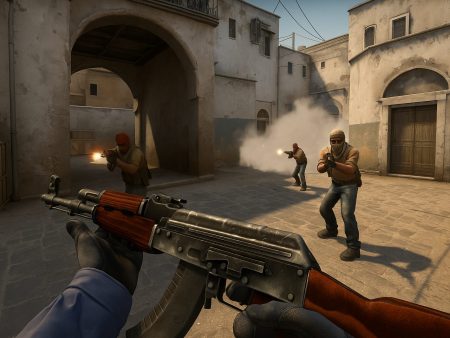
Master Vertigo in CS:GO with this complete guide to smokes, molotovs, flashes, and grenade lineups. Learn pro strategies, essential utility tips, and lineup practice tricks to dominate every match.

Vertigo, a high-rise construction site turned competitive CS:GO battlefield, is easily one of the most controversial and strategically complex maps in the game. It’s not your average flat-surfaced layout. Instead, it’s filled with verticality, narrow chokepoints, and open high-ground duels that make proper grenade usage not just useful—but absolutely essential.
When players first step into Vertigo, the map’s tight corridors, fast rotations, and multiple levels can feel disorienting. It’s a map that punishes poor timing and rewards well-executed utility with map control and bombsite domination. Unlike Mirage or Inferno, Vertigo has a much steeper learning curve when it comes to effective smoke and grenade usage due to the limited space and the high value of map control at choke points.
What makes Vertigo fascinating is how the utility usage directly affects win conditions. For example, a single well-placed smoke at A ramp can delay a push or force an awkward entry. A perfectly timed molotov can completely shut down a mid-lurk. And if you think grenades are just for entry points—think again. Defensive grenade usage is just as vital, especially with how quickly a team can rotate and re-hit a site.
So, if you want to climb the ranks and dominate on Vertigo, you need more than just good aim—you need grenade mastery. This article dives deep into all the smokes, molotovs, flashes, and HE grenades you need to outsmart your opponents, take space, and win rounds like a pro.
Why Vertigo is Unique Compared to Other Maps
Vertigo’s uniqueness stems from its structural design and the way fights are forced upon players. It’s the only map where sound is crucial even more than usual—footsteps above or below you can signal rotation or aggression. And because it’s built vertically, grenades behave a bit differently. Smoke coverage needs to be exact; molotovs bounce unpredictably off scaffoldings and walls, and flashes are more difficult to land effectively without blinding yourself or your teammates.
Compared to more linear maps like Dust2 or Overpass, Vertigo compresses its map control battles into tighter areas. A ramp is one of the most hotly contested spaces in all of CS:GO. Holding or pushing this area demands perfect utility usage—smokes for angles, mollies to deny aggression, and flashes to set up for peeks. Mid control is risky and reward-based; losing it early without nades means giving up a split threat on either site.
Another major difference is how fast rotations occur. Because the bomb sites are stacked vertically and only a few seconds apart, players need to be ready to throw counter-utility on a dime. This further emphasizes learning consistent and reliable grenade lineups for both offense and defense.
In short, Vertigo isn’t just about holding angles—it’s about controlling chaos with calculated utility.
Importance of Utility Usage in Vertigo Gameplay
Let’s not sugarcoat it—if you’re not using your grenades properly on Vertigo, you’re basically playing the game with one hand tied behind your back. This map heavily favors teams that know how to delay pushes, isolate duels, and cut off information with smokes, flashes, and molotovs.
Every pro team that dominates Vertigo has one thing in common: flawless grenade usage. When you throw a smoke on A ramp, it’s not just to block vision—it’s to stall, bait nades, or fake presence. A good molotov can clear common boosts or deny a defender from hiding behind default. Flashbangs? Essential for turning narrow choke points into entry opportunities.
Moreover, utility allows players to safely reposition or force enemies into the open. On CT side, throwing a smoke at ramp lets you peek with cover or retreat without being punished. On T side, double mollying sandbags almost guarantees the removal of a lurking defender.
It’s not just about knowing lineups—it’s about when and why you throw them. Are you trying to delay a push? Do you want to fake a rotate? Are you setting up your AWPer for a peek? Each nade thrown must serve a purpose.
And remember, the beauty of Vertigo is that even one well-placed piece of utility can swing a round in your favor. If you’re not mastering this aspect, you’re falling behind.
Basics of Smokes and Grenades
Before we dive into lineups, let’s refresh the basics. Smokes, molotovs, HE grenades, and flashbangs are your four main utility tools in CS:GO. Each one serves a unique role in controlling space and disrupting the enemy.
- Smokes: Used to block vision and cut off angles. They’re crucial on Vertigo to cover open lines of sight like A ramp, B stairs, and mid window.
- Molotovs/Incendiaries: Area denial grenades that deal damage over time. Ideal for clearing out corners or stopping rushes.
- HE Grenades: Explosive damage dealers, best used to soften up opponents or finish off tagged players.
- Flashbangs: Used to temporarily blind enemies, perfect for setting up aggressive pushes or peeking safely.
In Vertigo, every utility throw needs to be intentional. Due to the close-quarter layout and overlapping sound cues, a mistimed nade can not only be wasted—it can give away your entire team’s plan. One poorly thrown flash at A ramp might blind your teammate and cost you the round.
The coordination of grenades is key. If your teammate smokes ramp, follow it up with a flash and swing. If you’re executing a B hit, make sure to smoke CT and Heaven before dropping onto site—else you’re walking into an open grave.
Always practice your lineups in offline servers, and bind your “jump throw” or “binds” for consistency. Good nades win games, bad ones lose them.
Essential Smokes on Vertigo
Now, let’s get into the juicy stuff—smokes that every player must know for Vertigo. These are the bread-and-butter lineups that can make or break rounds. We’ll divide this into A site, mid, and B site.
A Site Entry Smokes
- Ramp Smoke: A basic yet essential smoke to cut off vision from CT players holding close. Stand by T stairs, aim at a specific part of the beam, and jump-throw. This gives cover to move up the ramp.
- Left Site Smoke: Used to block off the close-left angle near default. This allows Ts to plant without being peeked.
- Heaven Smoke: A more advanced lineup that blocks off upper CT view, essential when executing with a full squad.
Mid Control Smokes
- Mid Window Smoke: Allows you to push up mid without being spotted by snipers or riflers holding from construction or CT.
- Connector Smoke: Helps in blocking rotation vision and gives control over mid to connector.
B Site Smokes for Executes
- CT Smoke: Thrown from the scaffolding or top ramp, it blocks vision from the back of site.
- Default Plant Smoke: Smokes off the area where you’ll be planting the bomb.
- Heaven Smoke (B site): Critical for avoiding the sniper’s angle from above.
Each of these smokes, when thrown in tandem, can shut down sightlines and force defenders into awkward fights. Practice these until they’re second nature—you’ll thank yourself in clutch moments.
Must-Know Molotov and HE Grenade Lineups
Molotovs and HE grenades are critical on Vertigo—not just for damage, but for controlling tempo, forcing movement, and flushing out defenders. One well-placed molly can win you a round by denying a key position or delaying a push just enough for your team to rotate. Let’s break down some of the most effective molotov and HE grenade lineups across Vertigo.
Molotovs to Clear Common Angles
On A Ramp, the sandbags position is a classic defender hideout. It’s common to see CTs boosted or holding tight angles there. To molly it:
- Stand near the T spawn ramp.
- Aim at the top corner of the beam above sandbags.
- Use a jump-throw bind.
This molotov spreads perfectly into the sandbags area and forces out anyone camping there—often leading to an easy kill.
Another must-know is the A site molotov behind default. When CTs fall back during executes, this position is their safety zone. Mollying it right as your smokes bloom creates panic and blocks off safe plant options.
Over at Mid, molotovs can be used to flush out players hiding behind metal box, ladder, or construction. These are tight corners that people often use to play around smokes. Tossing a molly there is a low-cost, high-reward move that clears space for a lurker.
At B stairs, molotovs thrown to the close corner or boost box make early pushes way safer. Mollying behind B default is also important during executes to flush defenders out of post-plant angles.
HE Nades to Punish Rushes and Forcebacks
HE grenades are usually overlooked—but they pack serious potential, especially in Vertigo’s choke-heavy design.
For instance, pre-nading the A ramp push can deal 30–60 damage on rushing enemies. Pair this with a molly, and you can severely damage or even kill opponents before you see them.
In mid, a bounce HE off the metal wall behind the ladder or T mid box can stop a lurk or force movement. When combined with a teammate’s molly, this becomes a deadly utility combo that often results in free kills or territory gained.
HEs are also great for finishing off tagged players in post-plant scenarios. If you’re retaking B and suspect someone is behind the default pillar, bounce a nade off the wall—it’ll either kill or soften them for the peek.
Overall, molotovs and HEs are not just situational—they’re foundational to map control and retake strategies. You should never be entering Vertigo without at least one molly in hand.
Popflash and Support Grenades
Popflashes and support nades are game-changers on Vertigo. Since many areas are tight and prone to quick engagements, a single flashbang can decide a fight. Whether you’re supporting a teammate or flashing yourself in, these grenades should be part of your muscle memory.
Best Flashbang Spots for Teammates
One of the most effective popflashes is for A ramp peeks. From CT side, you can stand at the back left of site and throw a high flash over the railing onto ramp. It pops behind cover and catches Ts pushing up blind. Your teammate can peek wide off it for a free frag.
From the T side, flashing over the ramp scaffolding before pushing is essential. Use a jump-throw to get it to pop mid-air right above the entry line—this keeps your teammates unblinded while catching defenders off-guard.
For mid support, a standing flash behind metal box can set up a peeking AWPer or rifler. It’s also useful during fast rotates to help clear ladder or connector safely.
At B stairs, flashbangs off the wall into upper scaffolding can blind anyone holding tight from site. If you’re trying to get your entry onto site, it’s a must-have throw.
Support Flashes While Pushing or Retaking
When executing onto A site, flashbangs thrown through the smoked-off ramp can create chaos and confuse defenders. Even if the smokes cover vision, a well-timed flash makes the difference between a clean plant and a slaughter.
During retakes, especially on B, a simple banked flash off the right wall of construction can pop behind cover and blind Ts holding default or close box. This gives your teammates the chance to push in and clear without taking blind duels.
Some of the best support flashes require little setup and have massive impact. Always call out when you’re flashing—especially in tight Vertigo fights where friendly fire is just one flash away.
Advanced Smoke Lineups for Competitive Play
If you’re serious about dominating Vertigo, basic smokes won’t cut it. You need advanced lineups that give you a tactical edge—these include one-way smokes, deep site coverage, and utility denial smokes.
One-Way Smokes and Their Use
One-way smokes are a bit controversial but incredibly effective when used correctly. On Vertigo, one of the most well-known is on A ramp, just behind sandbags:
- Stand by the right beam on ramp.
- Aim mid-height at the metal divider.
- Toss a smoke that lands halfway on the ledge.
This creates a small one-way for you to peek while remaining nearly invisible. Use it sparingly—once players catch on, it becomes a liability. But in pugs or low coordination games, it can net easy picks.
There’s also a one-way smoke on B site scaffolding. Tossed behind the boost box, it allows defenders to hold aggressive angles while being concealed.
Cross-Smokes and Deep Coverage
Advanced cross-smokes are best used in executes. For example, to take A site, throw a double smoke setup—one for left site wall, and one for heaven. This gives you full coverage to plant and cuts off any defenders playing retake or back site.
At B site, use double smokes to block CT and heaven, while a third smoke for default plant zone gives safe cover to get the bomb down.
For mid takes, throw a smoke that cuts CT view through ladder, combined with a deep window smoke—this allows your team to push and threaten both sites.
These smokes take more coordination but provide immense control over the pace and outcome of a round.
Utility for Retake Scenarios
You’re down 3v3, bomb’s planted, and you’ve got seconds to retake. What now? Your utility is your best friend. On Vertigo, retakes are fast-paced and demand precise execution. Here’s how to use utility effectively in those high-pressure moments.
A Site Retake Smokes and Flashes
One of the best A retake smokes is for ramp control. Tossing a smoke near the default area can obscure Ts holding post-plant angles, making it easier to creep in. Combine this with deep flashbangs over site to blind anyone behind default, scaffolding, or heaven boost.
A molotov for behind default also flushes out common plant positions. If you’ve got a teammate with a kit, smoke the bomb and bait with a fake defuse while others peek off sound queues. Flashbangs here are essential for retaking without getting pre-fired.
B Site Retake Utility Tips
For B site, use a smoke on default plant or heaven view. This cuts off vision and allows your team to sneak into site. If enemies are known to play behind pillar or scaffolding, a molotov thrown from construction can eliminate them or force them into awkward peeks.
One underused tactic is the HE + flash combo while retaking. Bounce an HE off the wall behind default, then flash immediately and push. This not only softens up opponents but also blinds them just long enough for a swing.
The key to retakes is coordination. Don’t throw all your nades at once. Layer them to apply pressure in stages—smoke, molly, then flash. Make your opponents feel trapped.
Common Mistakes with Utility on Vertigo
Even seasoned players make utility mistakes that cost rounds. Vertigo punishes poor utility more than any other map due to its vertical structure, tight angles, and sound-sensitive layout. Understanding what not to do is just as important as knowing your lineups.
Overusing or Misusing Utility
One of the most common issues is overusing grenades too early in the round. For instance, CTs often blow both smokes and molotovs in the first 20 seconds at A ramp, leaving them dry if the T-side executes late. If the Ts are baiting utility, they’ve just won the round by default.
Likewise, players often throw panic smokes—grenades lobbed with no clear purpose or with poor placement. A bad smoke can create one-way angles for your enemies, obscure your teammate’s line of sight, or even isolate players trying to rotate.
On the T-side, a classic mistake is mismatched smokes during executes. If one player throws too early, and another is delayed, the staggered utility gives defenders perfect timing to strike. Poorly placed smokes at A ramp or mid window leave huge gaps for AWPers to peek through. This defeats the whole purpose of the smoke.
Lack of Coordination and Communication
Utility must be a team effort, not a solo move. One player flashing mid while another is trying to peek solo doesn’t work. If you’re pushing A site, everyone must know the plan: who smokes heaven, who molotovs sandbags, who throws flashes? Without coordination, utility is wasted—or worse, it blinds and burns your own teammates.
Many players also fail to communicate what they’ve used. If a CT says “I smoked ramp,” but doesn’t mention the molotov is still available, teammates may back off or assume the site is covered. Communication is everything.
Lastly, there’s the issue of repeating patterns. If you throw the same smoke every round, opponents will adapt. They’ll push through, pre-fire your molotovs, or time their executes to counter your setup. Mix it up. Delay, fake, or double-smoke when needed.
Avoiding these mistakes can instantly boost your win rate. Smart utility is about patience, coordination, and unpredictability.
Practicing Your Lineups
Knowing utility lineups is useless if you can’t execute them consistently. The secret? Deliberate practice. Let’s cover how to sharpen your grenade game and turn theory into muscle memory.
Best Workshop Maps for Utility Practice
Head over to the CS:GO Workshop and search for maps like:
- “Yprac Vertigo Guide” – Offers visual guides, step-by-step lineups, and even built-in challenges for smokes, molotovs, and flashes.
- “Training_aim_csgo2” + “Recoil Master” – While not utility-focused, they help you warm up between practice sessions.
These maps let you isolate each grenade and try it over and over until it sticks. You can mark spots, record your setup, and practice timings.
Setting Up Binds and Commands for Practice
Before you hop into a practice server, use the following commands for unlimited utility and quick resets:
sv_cheats 1
sv_infinite_ammo 1
ammo_grenade_limit_total 5
mp_roundtime 60
mp_restartgame 1
bind "ALT" "+jumpthrow"
The jumpthrow bind is crucial for consistent long-distance smokes.
Additionally, use:
noclip
sv_grenade_trajectory 1
sv_grenade_trajectory_time 10
These let you fly around and watch the path of your grenades. You’ll immediately see what went wrong or how to fine-tune your aim.
Repetition is key. Don’t just practice 10 smokes once. Drill the same smoke 20 times in a row. Add pressure by setting a timer—can you throw all your A site execute nades in 10 seconds?
Mastery comes from focused effort, not random play. Set aside 20 minutes a day for utility practice and you’ll see results within a week.
Team Strategies with Coordinated Utility
Grenades aren’t just individual tools—they’re how teams orchestrate dominance. When utility is used in sync, it becomes devastating. Let’s break down a few coordinated strategies that elevate team play on Vertigo.
Executing a Coordinated A Push
An ideal A site hit starts with early ramp pressure. One player smokes left site, another throws a molotov for sandbags, and a third throws a flash over the ramp.
Once your front line clears sandbags, you set up for the real push:
- One smokes heaven from scaffolding.
- One molotovs default.
- Double flash and swing together into site.
This five-piece puzzle blocks vision, clears common spots, and blinds defenders. It gives Ts a safe plant zone while minimizing the risk from CTs on upper or rotating from mid.
Most importantly, everyone should know their role. If someone misses their molotov, the entire plan can fall apart. Practice these drills like football teams rehearse plays.
Fake Execute Setups Using Utility
Vertigo is perfect for fake strategies. Throwing ramp smoke + molly sandbags doesn’t always mean you’re going A. Once the CTs rotate, your lurker mid throws a connector smoke and your team silently rotates to B.
You can also use dry utility—like throwing a flash and molly at A ramp while walking B. The defenders may call a hit and rotate early, leaving B wide open for the real push.
Fakes succeed when you sell the illusion with realistic utility patterns. CTs are forced to guess—and they often guess wrong.
High-level team play is all about deception and synergy. Use grenades not just to hit sites, but to manipulate the enemy’s rotations and force mistakes.
Utility Usage from the CT Side
While most guides focus on T-side executes, CTs have just as much power with utility—especially on a map like Vertigo where information denial is crucial.
Defensive Smokes and Molotovs
A well-timed smoke on A ramp delays any early pushes. Pair it with a molotov on sandbags or scaffolding, and you control the pace. Don’t overextend—just use the nades to stall, gather info, and wait for support.
On B site, smoking the stairs early denies fast control. Molotovs thrown from construction onto scaffold boost box can prevent Ts from getting early positioning.
When it comes to mid, a simple connector smoke or a molotov to ladder can block lurkers and delay splits.
Information Denial and Map Control
CTs must also focus on countering map control. If Ts constantly get up A ramp, change it up. Instead of fighting with guns, fight with utility. Molotov ramp at 1:15, then smoke at 1:00—suddenly, the Ts have 40 seconds and no control.
Use flashes defensively too. A popflash from behind A site can let your AWPer peek for info. A well-thrown flash into B stairs lets your teammate re-aggress and check for lurking Ts.
In pro play, CTs don’t just react—they dictate the round with grenade usage. And so should you.
Vertigo Utility in Pro Play
Watching how the pros play Vertigo can drastically improve your understanding of utility usage. Tier-1 teams like Vitality, FaZe, NaVi, and G2 have shown surgical precision when it comes to smokes, molotovs, and flashes on Vertigo. The map rewards teamwork and timing, and pro-level utility lineups are a big part of what sets them apart.
Examples from Tier-1 Matches
Let’s look at Team Vitality as an example. Their A executes are textbook-perfect. They routinely use triple smokes for heaven, left site, and top ramp, combined with molotovs for sandbags and behind default. While this may sound like overkill, it guarantees safe site entry and forces CTs into passive positions.
NaVi often uses fake utility to draw rotations. For example, they throw a full A execute but leave a lurker mid. As CTs rotate, that player sneaks into connector or flanks B site, collapsing the defense from both sides.
Another great example is FaZe Clan’s CT setups. They use layered utility to delay pushes and create kill windows. Double molotovs at ramp, a smoke for scaffolding, and a timed flash over the crane all create a minefield that punishes impatient Ts.
These teams don’t throw grenades randomly—they use them to control the tempo, condition the enemy, and execute plays with precision.
Learning from the Pros’ Setups
The best way to learn from pros is by watching demo replays:
- Head to HLTV.org or use GOTV in CS:GO.
- Pick a Vertigo match from a top-tier team.
- Watch one player’s POV and note when and why they use utility.
Pay attention to the following:
- Do they smoke early or delay it?
- Where are they aiming their molotovs?
- How do they flash for teammates?
You’ll begin to notice patterns—and once you understand the reasoning, you can apply it in your own games. Even if you can’t copy every lineup, the logic behind the throws will elevate your game sense tremendously.
Boost Spots and Utility Combos
On Vertigo, boosts and grenade combos go hand in hand. Clever boosts can give players unexpected angles, and pairing them with utility makes them even deadlier.
Smokes + Boost Combos for Info Plays
A classic play on A ramp is the sandbags smoke + boost. One player smokes deep ramp while the other gets boosted behind sandbags. It gives a one-way vision over the smoke and can net a free pick if the Ts peek carelessly.
Another effective combo is in mid, where a teammate can boost you onto the box near ladder. From there, you get a cheeky peek into mid window. Combine this with a smoke in connector and a flash into T mid, and you have a lethal setup.
At B site, boosting behind scaffolding smoke can surprise Ts trying to lurk or line up utility. It’s risky—but when timed well with flashes and sound cues, it often pays off.
Molotov Setups for Forcing Movement
Molotovs work great with boosts. For instance, mollying behind default while someone peeks from heaven can flush enemies into the open for an easy frag.
One of the deadliest combos? Popflash + molly + swing. Let’s say you hear Ts lining up smokes on ramp. Toss a molly toward sandbags, flash over, and peek wide. You’ll catch them mid-lineup, panicking and easy to kill.
Grenade combos are about layering pressure. Don’t rely on just one nade—create chaos with two or three tools and capitalize while enemies are disoriented.
Improving Your Game Sense with Utility
Utility usage isn’t just mechanical—it’s mental. Top players don’t just throw grenades on cooldown; they anticipate enemy moves and use nades preemptively, not reactively.
Predicting Enemy Movement
On Vertigo, predicting your opponent’s habits is key. Does the enemy AWPer peek ramp every round? Toss a molly and delay their timing. Do they rush mid at 1:15? Stack your HE grenades at that moment and punish them.
Game sense is built by observing patterns. If you get punished by the same push twice, adjust your utility the third time. Pre-fire, pre-nade, pre-molly—it all adds up.
Using Audio and Map Knowledge with Nades
Sound is everything on Vertigo. Footsteps on metal, ladder drops, and utility usage all give away intentions. If you hear a molly on sandbags, expect a peek. If two smokes go down ramp, get ready for an execute.
Use your nades based on what you hear and see, not just the timer. Sometimes it’s smarter to hold onto a smoke until the Ts commit, rather than waste it early and get rushed with nothing in hand.
The more you play, the more you’ll start to “feel” the timing. That’s game sense. It can’t be taught directly—but it can be accelerated with smart utility decisions.
Conclusion
Vertigo might seem like chaos to the untrained eye—but to the strategic mind, it’s a chessboard of opportunity. Every smoke, molotov, flash, and HE grenade can tip the balance in your favor. Whether you’re holding a tight angle, pushing with confidence, or retaking with precision, smart utility use is the true path to mastering this vertical battleground.
We’ve covered everything from basic smokes to advanced pro-level plays. Now it’s your turn. Practice your lineups. Coordinate with your squad. Watch the pros and mimic their setups. Turn grenade throws into muscle memory and start using them with intent.
Because in Vertigo, it’s not just the bullets that win rounds—it’s the brains behind the grenades.
FAQs
What’s the best smoke for A site execute on Vertigo?
The most critical smoke is the heaven smoke. It denies vision from CTs rotating from mid and lets Ts plant safely. Pair it with smokes for left site and top ramp for full coverage.
How can I practice utility lineups easily?
Use workshop maps like “Yprac Vertigo” and set up commands like sv_grenade_trajectory 1 and sv_infinite_ammo 1. This lets you see the path of your grenades and practice them repeatedly without having to restart.
Are popflashes effective on Vertigo?
Absolutely. Vertigo’s tight choke points make well-placed flashbangs devastating. Use them to blind defenders holding A ramp, mid peeks, or B site corners. Just make sure to call out when you’re throwing.
What utility is most important as a CT?
Smokes and molotovs. Smokes delay rushes and block vision, while molotovs are perfect for denying space at choke points like A ramp or B stairs. Flashbangs help with retakes and info peeks.
Can one-way smokes be reported or banned in CS:GO?
One-way smokes are legal in CS:GO, but some tournaments or leagues may discourage overuse depending on the exploit. In matchmaking and PUGs, they’re fair game—just don’t rely on them too much.