Master CS2 round mechanics with this in-depth guide. Learn how timers, objectives, economy, and strategies shape each round in Counter-Strike 2. Perfect for beginners and competitive players alike!


The Competitive Nature of CS2
If you’ve ever dived into a match of Counter-Strike 2 (CS2), you know it’s more than just point-and-click shooting. CS2 is a highly competitive, tactical first-person shooter where the smallest decision can flip a round—and even the whole match—on its head. But here’s the kicker: everything revolves around rounds. Whether you’re clutching a 1v3 or coordinating a rush with your squad, understanding how rounds work in CS2 is critical. It’s the heartbeat of the game.
Rounds in CS2 are not just time-based segments. They’re miniature battles, each with specific rules, time constraints, and objectives. Winning a round requires skill, strategy, and sometimes, just plain luck. Lose track of the timer or misjudge an objective, and boom—you could throw away a perfectly winnable round. That’s why players at every level, from rookies to pros, obsess over perfecting their round management.
But here’s the good news—once you understand how rounds are structured, timed, and how each side operates within those bounds, your performance will skyrocket. In this guide, we’ll break down every aspect of CS2’s round mechanics so that you can start thinking like a pro—one round at a time.
Importance of Understanding Rounds for Strategy
So why is it so important to get a handle on round mechanics? Because every part of CS2 gameplay—from economy to map control to clutch plays—depends on it. Imagine trying to win a chess match without knowing how a knight moves. That’s what it’s like trying to play CS2 without understanding rounds.
Each round is an opportunity. It’s a chance to adapt your team’s strategy, correct past mistakes, and gain momentum. Whether you’re playing Terrorist (T) or Counter-Terrorist (CT), understanding the win conditions for that round gives you a massive edge. Knowing the timing can tell you when to rotate, when to push, or when to save your gear for the next round.
Let’s not forget the psychological warfare. A well-executed round win—especially with a low buy or unexpected strategy—can rattle the enemy team. It’s not just about killing. It’s about making smarter decisions, faster.
Basic Structure of a Round

Duration of a Standard Round
Each standard round in CS2 lasts 1 minute and 55 seconds (115 seconds), unless it ends sooner due to objective completion or team elimination. That’s not a lot of time when you think about how much needs to happen—spawning, buying weapons, moving into position, setting up plays, and executing the objective.
In the pro scene or competitive matchmaking, every second matters. Teams often use the early seconds for setup: throwing utility, taking map control, or reading the opposing team’s positions. Then comes the mid-round, where most of the action unfolds. The late-round is typically where bomb plants, defuses, and clutch plays occur. Timing is everything—wait too long, and you’ll be forced into a desperate push. Move too quickly, and you risk walking into a trap.
Number of Rounds per Match
A typical competitive CS2 match follows the MR12 format, which stands for “Max Rounds 12.” This means each team plays 12 rounds per half, with a total of 24 regulation rounds. The first team to win 13 rounds takes the match, but if the score ties at 12–12, the game goes into overtime.
This format replaced the older MR15 structure used in CS:GO (15 rounds per half). The MR12 change aims to create faster-paced matches while retaining the tactical depth CS is known for. What does this mean for players? Every single round now carries more weight than ever before. Losing just one or two rounds early can completely shift the momentum.
Overtime Rules and Win Conditions
So, what happens if both teams win 12 rounds each? Enter overtime.
In CS2 competitive settings, overtime typically consists of two halves of 3 rounds (6 rounds total). Each team gets a set amount of money—usually $10,000 or $12,500—to buy gear for these rounds. The first team to win 4 of the 6 rounds wins the match. If the score is tied again after overtime, additional overtimes are played until there is a clear winner.
Overtime adds a whole new layer of pressure. The margin for error shrinks dramatically. Players must manage their money tightly, optimize every strategy, and communicate flawlessly.
Starting the Match: The Pistol Round
Purpose and Impact of the Pistol Round
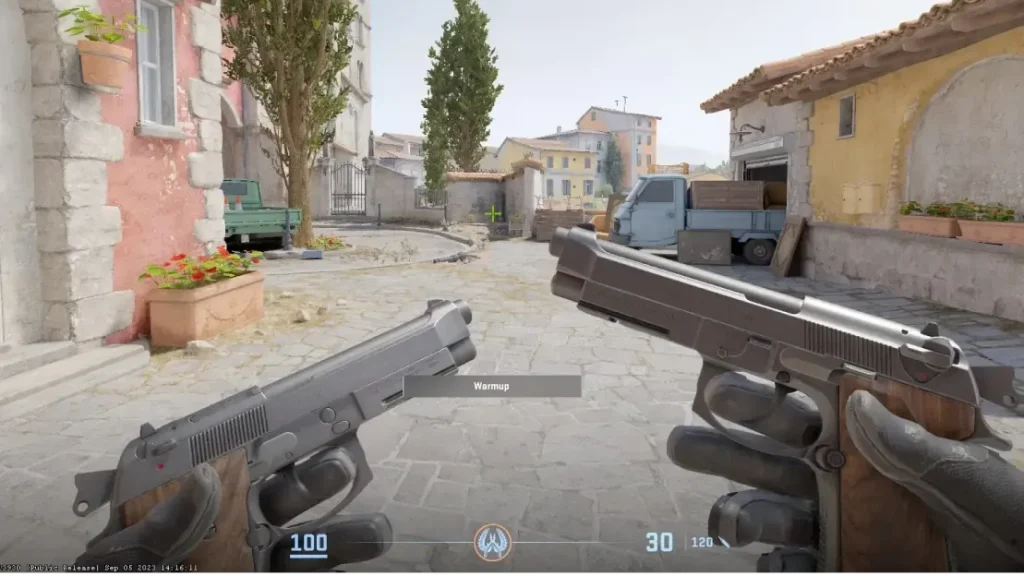
The pistol round is the first round of each half and arguably one of the most influential rounds in CS2. It sets the tone. Win the pistol round, and you not only score an early point but usually secure a strong economic lead going into the next two rounds.
Why is that? Because winning teams earn more money and can afford to buy better weapons in the next round (often called an “anti-eco” round), while the losing team is typically forced to save or buy low-tier pistols again. Winning the pistol round can lead to a 3-0 start, giving your team early momentum.
Even more, pistol rounds often showcase raw aim and individual skill since players are limited to sidearms, minimal utility, and armor. Teams prepare special strats for pistol rounds that differ from their rifle-round tactics.
Strategies Commonly Used in Pistol Rounds
Pistol round strategies are all about aggression, mobility, and surprise. Without rifles or full utility, teams rely on:
- Quick site rushes: Fast-paced plays designed to overwhelm the enemy before they can react.
- Fake plays: Throwing smokes or making noise at one site while quietly rotating to the other.
- Stacking sites: Defenders might gamble by putting 3–4 players on one site, hoping to predict the attackers correctly.
- Utility damage: Well-placed grenades (especially HE and flashes) can heavily damage enemies due to the low armor in pistol rounds.
Ultimately, teams tailor their pistol round strategy based on the map, the spawn positions, and their opponent’s tendencies. Some teams even dedicate practice time specifically to perfect pistol round setups.
Objective-Based Round Structure
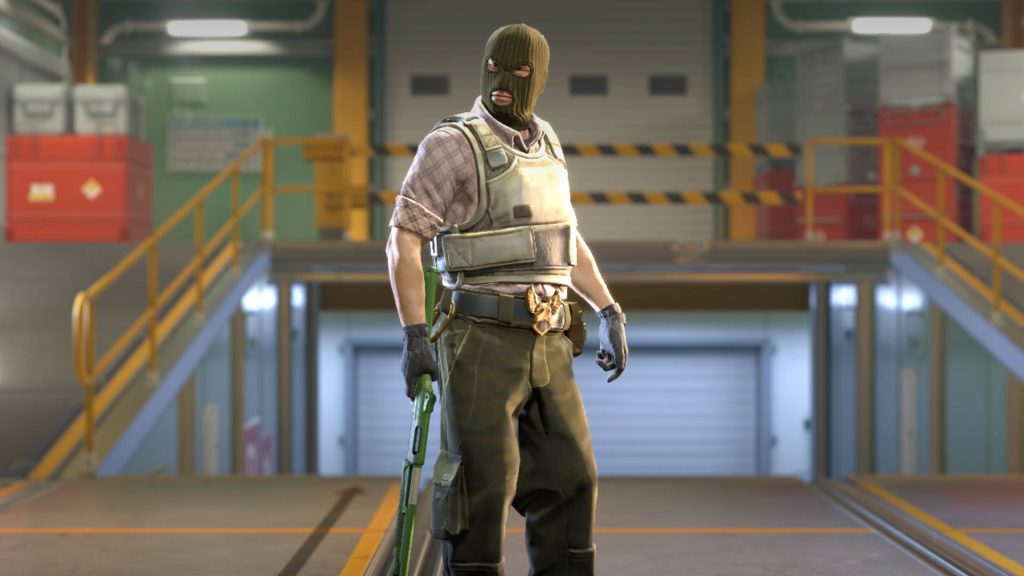
Terrorist Objectives – Planting the Bomb
In CS2, the Terrorist team’s main goal is to plant the bomb at one of two bomb sites (A or B) and ensure it detonates. Planting the bomb starts a 40-second countdown. If it’s not defused by the CTs in that time, the Terrorists win.
The bomb can only be planted on designated bomb sites and by the player holding the bomb (the “bomb carrier”). Communication and coordination are key here—losing the bomb in a bad spot can doom the round. Once planted, the game shifts into a post-plant scenario where the Terrorists must defend the bomb from being defused.
Counter-Terrorist Objectives – Defusing or Preventing
The Counter-Terrorists (CTs) aim to prevent the bomb from being planted or defuse it once it’s planted. If they eliminate all Terrorists before the bomb is planted, they win the round instantly.
If the bomb goes down, CTs must quickly regroup and try to retake the site, eliminate any defenders, and defuse the bomb. A defuse without a kit takes 10 seconds, while a defuse with a kit takes only 5 seconds. That’s why CTs often prioritize buying defuse kits during the buy phase.
Alternate Win Conditions – Elimination and Timeouts
Sometimes, rounds end in ways that don’t involve the bomb at all:
- Full Team Elimination: If one team wipes out the other before the objective is completed, they win.
- Time Expiry: If the Terrorists fail to plant the bomb before the timer hits zero, the CTs win automatically—even if no one dies.
These alternate win conditions add layers of strategy. For instance, if time is low, CTs may just play safe and let the clock run out. Similarly, Ts might force a risky push to beat the timer.
Buy Phase and Economy System

What Happens During the Buy Phase
Every round in CS2 begins with a short Buy Phase, typically lasting about 15 seconds (sometimes more in casual modes). This is the crucial window where players can purchase weapons, armor, and utility using the money they’ve earned. Think of it as a quick pit stop—you’re gearing up for battle, and every second counts.
During this phase, players can:
- Buy primary weapons (rifles, SMGs, shotguns, etc.)
- Buy secondary weapons (pistols)
- Purchase armor (Kevlar and Helmet)
- Acquire utility (smokes, flashes, grenades, molotovs, defuse kits)
The key? Speed and strategy. There’s no time to debate once the timer hits zero—you need to know what your role is, what your team is doing, and how your buy fits into that plan. Experienced players already know their preferred loadouts for different economic situations. Some teams even designate in-game leaders to call out what kind of buy the team should do.
Money Management and Team Economy
CS2 is a game of economy just as much as it is of aim. Every action you take in a round affects your money. Winning rounds gives you more cash, but even losing grants some money to help teams stay in the fight. Here’s how it works:
- Round Win (Bomb defused/detonated or enemy eliminated): $3,250 to each player.
- Bomb Plant Bonus (even if you lose the round): $800
- Loss Bonus: Starts at $1,400 and increases by $500 each round (up to $3,400 max for consecutive losses).
This system means even when you’re losing, you’re being given tools to potentially come back—if you use them wisely.
Players must manage their money collectively as a team. If one player full-buys while others are broke, it puts the whole team at a disadvantage. Teams will often coordinate:
- Full Buys (everyone has rifles, armor, and utility)
- Eco Rounds (no major purchases, saving for the next round)
- Force Buys (buying with whatever cash is available)
It’s a chess game, but with AK-47s and grenades. Poor economy management can lead to a downward spiral. Good economy play can spark a comeback even when the scoreboard says otherwise.
Eco Rounds, Force Buys, and Full Buys Explained
Let’s break these down a bit more:
- Eco Round: You buy nothing or very little—maybe just a pistol. The goal is to save money so you can fully equip in the next round. These rounds are high-risk, low-reward, but sometimes a well-timed pistol ambush or stack can win it all.
- Force Buy: This is a gamble. You spend most of your money on cheaper weapons (like SMGs or shotguns) and utility, hoping to surprise the enemy or exploit a weakness. It’s often used when you’re down in rounds but don’t want to give the enemy momentum.
- Full Buy: This is your “A-game” round. You’ve got rifles (AKs or M4s), armor, full utility, and a solid game plan. These are the rounds that usually decide momentum shifts and are heavily strategized.
Smart teams use these buys like tools in a toolbox—choosing the right one for the situation. A perfect eco or force buy win can break your opponent’s morale—and their economy.
Timers and Round Phases
Pre-Round Timer and Setup Time
Before each round officially begins, players get a freeze time (also called pre-round setup phase). This usually lasts about 15 seconds, giving you time to:
- Buy weapons and gear
- Communicate with your team
- Set up early positioning plans
During freeze time, you’re locked in your spawn. It’s essentially your strategy room—a few precious seconds to decide who’s going where and what the play will be. In professional play, teams use this time to execute complex strategies with synchronized movement.
Don’t waste it. Freeze time isn’t just about buying—it’s about mentally prepping for battle. The players who use this time wisely are already two steps ahead before the first shot is fired.
Active Round Timer
Once freeze time ends, the round begins, and the active round timer starts counting down from 1 minute and 55 seconds. This is your main window to execute your plan.
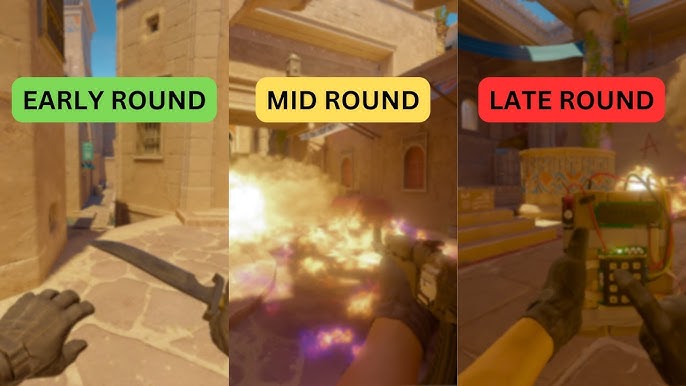
This time is often split into three informal phases:
- Early Round: First 30–40 seconds, used for utility, map control, early picks.
- Mid Round: Tactical rotations, fake plays, and bomb site pressure begin.
- Late Round: Final decisions—committing to a site, planting, clutching.
Every second counts. A poorly timed rotation or slow push can mean the difference between victory and failure. Running out of time without planting the bomb means you lose, even if you’re still alive.
Post-Plant and Defuse Timers
The moment the bomb is planted, a new timer begins: 40 seconds until detonation.
This countdown is the most nerve-wracking part of CS2. The pressure skyrockets for both teams:
- Terrorists must hold positions and delay defuse attempts.
- Counter-Terrorists must regroup and launch a retake.
If a CT starts a defuse:
- Without a kit: 10 seconds to defuse
- With a defuse kit: 5 seconds
Many rounds come down to the wire—bombs defused with milliseconds to spare or explosions just before a final elimination. That’s why managing your post-plant setup, timing, and utility is critical.
Round End Scenarios
Bomb Detonation
The most iconic CS2 ending: The bomb explodes.
If the Terrorists successfully plant and defend the bomb for 40 seconds, the round ends with a detonation, granting them the win. This not only earns them the round but boosts their economy going forward.
Explosion animations, sound cues, and voice lines make this moment intense. It’s also a morale booster—players live for the satisfaction of a successful detonation.
Bomb Defusal
If the CTs manage to defuse the bomb within 40 seconds, they win the round, even if some or all of the Terrorists are still alive. It’s an ultimate checkmate move—you’re not just outgunning, you’re outsmarting.
Timing, kits, and teamwork are everything here. Successful defuses often require:
- Utility (smokes/flashes) to block vision
- Trade kills to protect the defuser
- Clutch plays under pressure
A perfectly timed defuse can swing momentum, break enemy morale, and reset the pace of the match.
Elimination and Time Expiry Outcomes
Not every round ends in bomb-related drama. Some end with:
- Full Elimination: If one team eliminates all players of the other before the objective is completed, they win automatically.
- Time Runs Out: If the Terrorists don’t plant the bomb in time and the CTs are still alive, the CTs win by default.
This encourages Terrorists to play faster and forces action in the late round. Playing against the clock adds immense pressure and often leads to chaotic finishes.
Side Switching and Half-Time
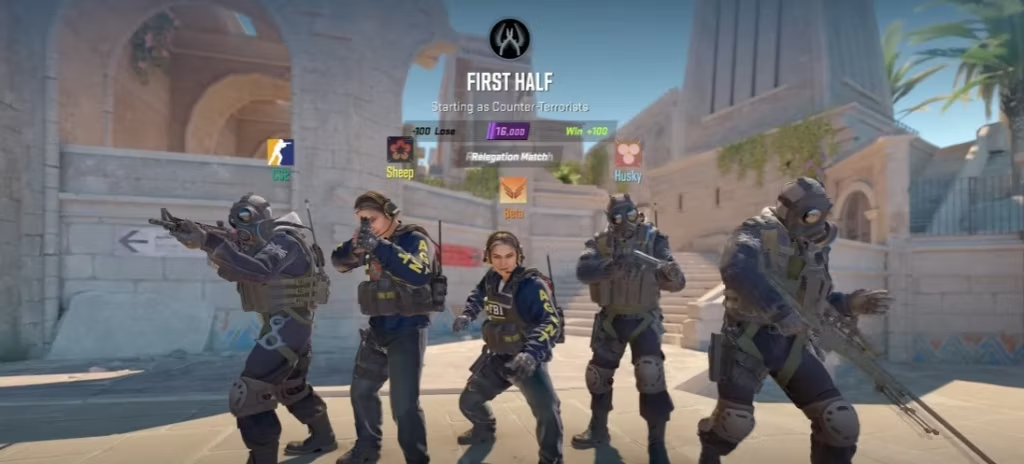
When and Why Teams Switch Sides
After 12 rounds, the teams switch sides. Terrorists become Counter-Terrorists and vice versa. This is known as half-time, and it’s crucial for balance.
Each team gets a chance to play both roles because some maps are CT-sided (easier for Counter-Terrorists) while others favor Terrorists. Switching ensures fairness and tests teams’ adaptability.
Knowing how to adjust strategies on both sides separates the good from the great.
Strategic Impact of Side Switching
Side switching is also a psychological and tactical reset. It gives teams a moment to rethink their approach, rally from a deficit, or press an advantage.
Smart teams use the switch to:
- Change momentum after a bad first half
- Utilize different players’ strengths based on side
- Exploit weaknesses they noticed in their opponents
A team that dominates as CT but struggles on T-side needs to prepare differently than a well-rounded squad. Flexibility is key.
Overtime Rules and Scenarios
What Triggers Overtime
In competitive CS2 matches, if both teams win 12 rounds in regulation (12-12), the game goes into overtime. This happens because the match format is MR12—so neither team reached the necessary 13-round win condition to end the game normally.
Overtime kicks the intensity up to another level. Players are already mentally and mechanically fatigued, yet now they need to clutch up under even more pressure. The smallest mistakes become massively punishing, and the stakes skyrocket.
Each team gets a set amount of money—usually $10,000 or $12,500—for each overtime half, which is made up of 3 rounds per side. The first team to win 4 of these 6 rounds takes the victory. If they tie 3-3 again, another overtime follows.
How Overtime Differs from Regular Rounds
While the rules of each round in overtime are fundamentally the same as in regulation (same timers, objectives, etc.), the mindset and strategy often shift dramatically. Here’s why:
- Money Management Becomes Critical: Unlike regulation, overtime gives you a fixed economy. If you blow all your money in the first round and lose, your next round is compromised. This adds another layer of tactical depth.
- Playstyle Becomes Conservative: Players often default to safer, more methodical playstyles in overtime. One mistake could cost the entire match. Expect more calculated pushes, fewer rushes, and a lot more utility usage.
- Pressure is Real: Overtime is where nerves are tested. Decision-making, communication, and mental toughness become just as important as raw aim. This is where veterans often outperform less-experienced players.
In short, overtime is CS2 at its finest—high-stakes, high-skill, and incredibly exciting.
Importance of Communication and Team Coordination

Callouts, Rotations, and Role Assignments
If there’s one thing that separates casual play from competitive greatness, it’s communication. CS2 is not a solo game—it’s a team sport. Every round’s success depends on how well your team talks, rotates, and executes plans together.
- Callouts are the lifeblood of coordination. A quick “One mid, low HP” or “Pushing A long now!” can save a teammate or set up a kill. Learning map-specific callouts is essential.
- Rotations refer to when players move between bomb sites to support teammates or respond to enemy action. Effective rotations can shut down pushes or reinforce defenses before it’s too late.
- Role Assignments keep things organized. Most teams assign roles such as:
- Entry Fragger (leads the charge)
- AWPer (sniper and long-range specialist)
- Lurker (flanks enemies silently)
- Support (throws utility, sets up plays)
- IGL (In-Game Leader) (calls strats and tactics)
When everyone knows their job and communicates, rounds flow much smoother—and wins come more consistently.
Real-Time Strategy Adjustments
Even the best-laid plans can fall apart. That’s why the ability to adjust mid-round is crucial. Pro teams constantly adapt based on what they see, hear, or experience.
For example:
- If an early push fails, the team might rotate and execute on the other site.
- If a defender spots utility coming into a site, they might call for backup immediately.
- If a player gets a pick mid-round, the team might speed up the play to capitalize on the advantage.
This fluid, on-the-fly style of thinking turns good teams into great ones. Reading the enemy, reacting smartly, and using real-time data is how rounds are truly won.
Map-Specific Strategies and Round Execution
How Maps Affect Round Tactics
Not all maps are created equal. Each CS2 map has a unique layout, choke points, bomb sites, and rotation paths. Some maps are notoriously CT-sided (like Nuke), while others lean slightly T-sided (like Mirage).
Your round strategy must account for the map’s structure:
- Vertigo has vertical layers and tight corridors.
- Inferno requires strong banana control.
- Dust2 centers around long-range fights and mid control.
Teams craft map-specific strategies that focus on controlling key areas, managing utility, and capitalizing on known enemy tendencies. Smokes, mollies, and flashes are thrown with pixel-perfect precision to block vision, flush out campers, or delay pushes.
Great players know their maps inside out—not just the callouts, but also grenade lineups, wall bangs, timing routes, and hiding spots.
Importance of Map Control and Utility Usage
Map control is all about information and space. The more of the map you control, the more information you gather, and the more options you create. For example:
- On Inferno, controlling mid gives Ts access to both A and B site.
- On Overpass, long A and bathrooms control allows better late-round execution.
Utility usage is key to gaining control:
- Smokes block vision
- Molotovs clear corners
- Flashes blind enemies before pushing
- HE grenades deal damage to grouped enemies
Rounds are often decided by who uses their utility better. A single well-timed smoke can delay a push. A missed molotov can let an enemy lurk through and ruin your plan.
Map awareness and utility usage turn even eco rounds into winnable situations. That’s the beauty of CS2—it’s never just about firepower.
Round-Based Objectives vs. Overall Match Goals
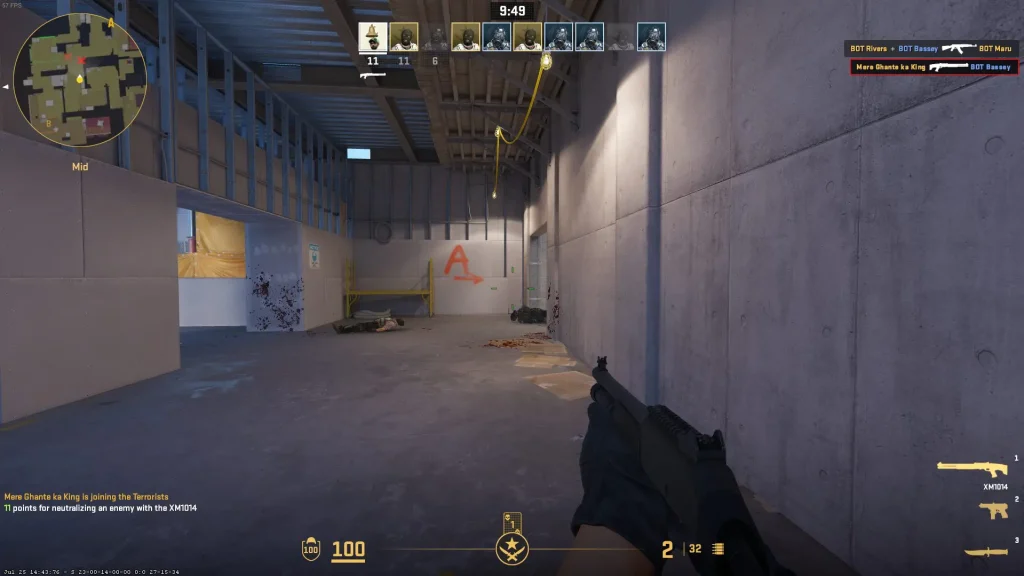
Micro vs. Macro Strategy in CS2
Think of rounds as chess moves. Each one is small on its own, but collectively, they shape the match. That’s where understanding micro vs. macro strategy comes into play.
- Micro Strategy: In-round tactics. It’s your grenade throws, your bombsite holds, your decision to peek or fall back.
- Macro Strategy: Match-wide thinking. When to save, when to force buy, how to pressure the economy, and which players to target.
Successful teams balance both. You might lose a round but hurt the enemy’s economy so badly that the next two rounds become easier. Or maybe you choose to save and play for the long-term win rather than a risky short-term play.
Macro strategy often happens between rounds, during brief pauses or timeouts. Teams discuss:
- Money status
- Enemy tendencies
- Round adaptations
This long-term vision is why top-level CS2 is like a mental battle. Every round is part of a larger war.
Balancing Immediate Goals with Long-Term Plans
Not every round should be approached with “must win” urgency. Sometimes, the smarter move is to save weapons, conserve money, or plan for the next round.
For example:
- You’re down 2 players and the bomb is planted? Maybe it’s smarter to save your rifle for the next round.
- Lost the pistol round? Don’t force buy—take the eco and build money for a strong round 3.
Balancing immediate round goals with long-term match plans is what separates reactive teams from strategic masterminds. Know when to fight and when to fold—that’s how you win the war, not just the battle.
Learning from Pro Matches
Round Breakdowns in Tournaments
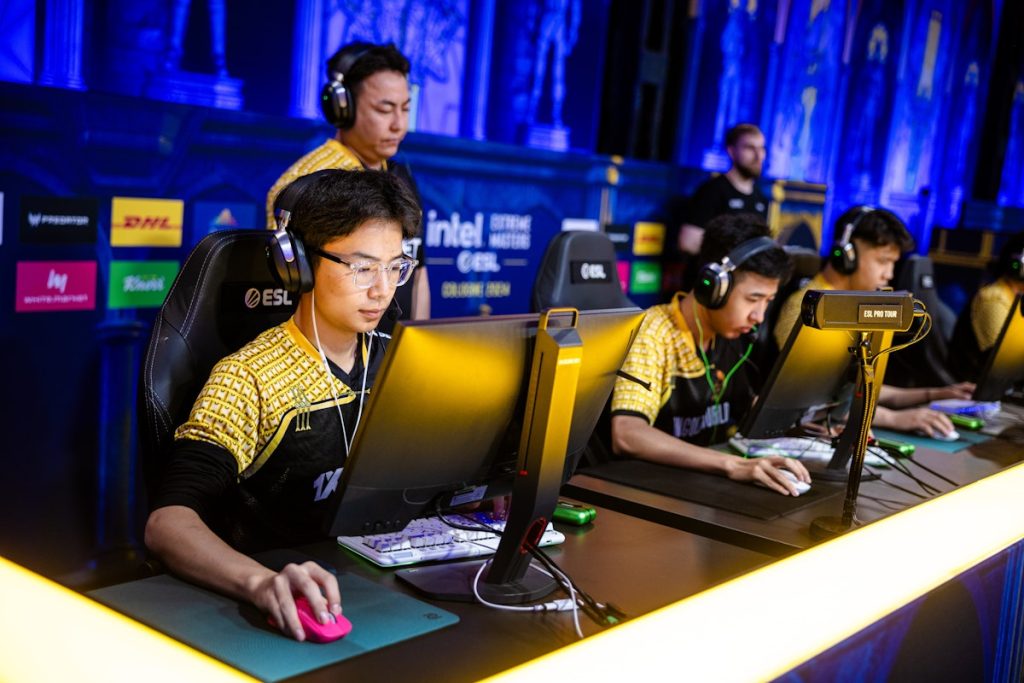
If you really want to understand how CS2 rounds work at the highest level, you’ve got to watch pro matches. It’s not just entertainment—it’s a masterclass in strategy, timing, and teamwork. Each round played in a top-tier tournament is a carefully choreographed dance of skill and tactics.
Casters and analysts often break down pivotal rounds:
- Why a team chose to eco when they did.
- How utility was perfectly used to gain site control.
- How a player clutched a 1v3 using timing and positioning.
Studying these rounds helps you understand why teams do what they do. You’ll start to notice:
- Default setups and how they change per map.
- How rotations are called mid-round.
- When and why certain players lurk while others entry.
It’s like watching chess—but every piece is holding a rifle.
How Pros Use Rounds to Gain the Upper Hand
Pro players don’t just play rounds—they manipulate them. Here’s how:
- Pacing: They mix up fast rushes with slow, methodical defaults to keep enemies guessing.
- Mind Games: Faking a push, then pulling back to hit the other site at the last second.
- Economic Pressure: Forcing opponents into awkward buys through consistent pressure.
Every round has a goal beyond just winning. Sometimes the goal is to:
- Damage the enemy economy.
- Gain information on player positions.
- Condition the enemy to expect a certain pattern.
This deep level of play is what makes CS2 so fascinating. It’s not just about shooting—it’s a constant psychological tug-of-war.
Mistakes to Avoid in CS2 Rounds
Common Errors Made by New Players
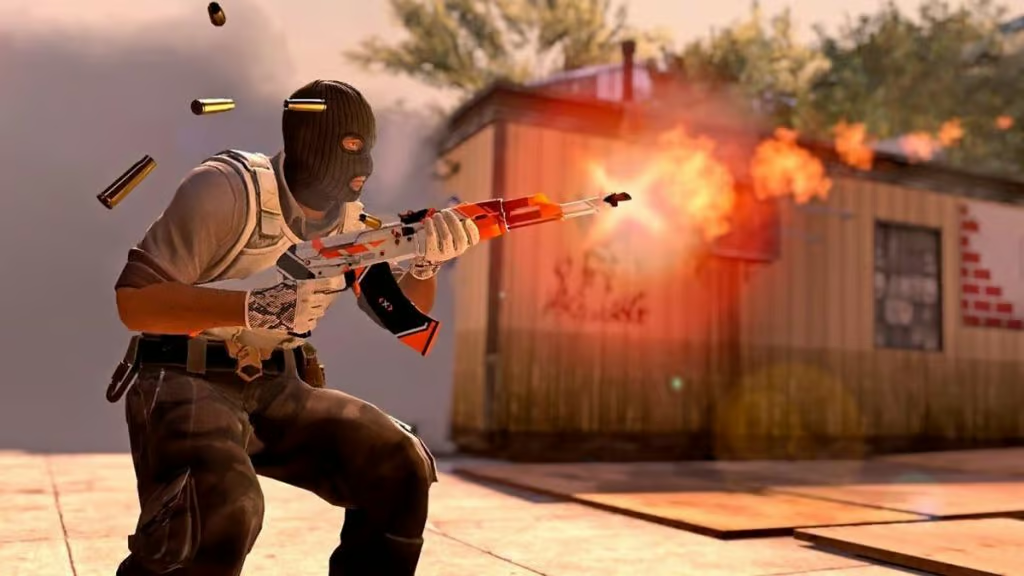
Learning CS2’s round system can be a grind, and it’s easy to fall into common traps. Here are a few mistakes you don’t want to make:
- Ignoring the Clock: Running out of time without planting is a rookie move.
- Chasing Kills Instead of Playing the Objective: You don’t need to eliminate everyone—just complete the objective.
- Poor Utility Usage: Wasting flashes or throwing smokes that don’t help is worse than not using them at all.
- Uncoordinated Buys: One player with a rifle while the rest have pistols? Recipe for disaster.
The good news? These mistakes are fixable with practice and awareness. The more rounds you play—and learn from—the better you’ll get.
How to Improve Round Awareness and Decision-Making
Improving in CS2 is less about muscle memory and more about game sense. Here’s how you build it:
- Watch Your Own Demos: See what went wrong. Were you too slow? Did you push when you should’ve held?
- Play With Communication: Solo queue is tough, but even using a mic to make basic callouts improves your odds.
- Learn Utility Lineups: Knowing a few smokes and mollies for each map can dramatically boost your round impact.
- Understand Win Conditions: Ask yourself mid-round: What’s our path to winning this? It’ll change how you play.
Awareness takes time, but every mistake is a lesson in disguise.
Tools to Practice Round Mastery
Community Servers and Training Maps
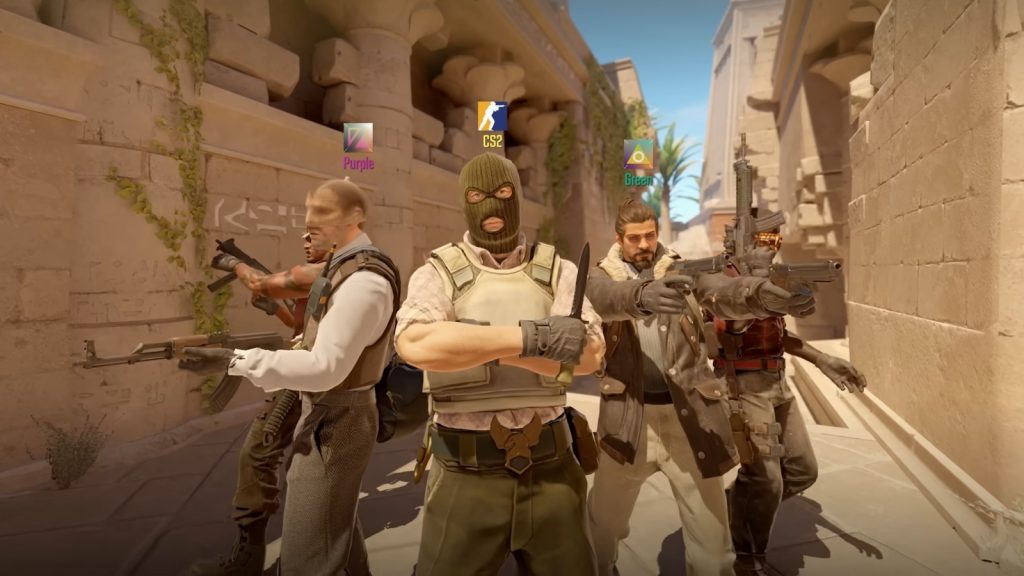
CS2 has a robust community of mapmakers and trainers who’ve created practice maps for:
- Smokes and flashes
- Pre-aiming and reflexes
- Bomb site retake simulations
You can join community servers that mimic real round situations—perfect for practicing clutch scenarios or improving reaction time under pressure.
Some popular tools include:
- Yprac Training Maps (great for learning utility and site entry)
- Aim Botz (reflex training)
- Recoil Master (spray control)
Use these tools consistently, and your round confidence will soar.
Watching Demos and Analyzing Rounds
Demo reviews are the goldmine of improvement. CS2 allows you to:
- Watch your own matches.
- Slow down rounds.
- View from your opponent’s perspective.
You’ll spot tendencies like:
- Over-rotating
- Taking the same path every round
- Flashing teammates by accident (don’t worry—we’ve all done it)
Set a goal: watch one demo per day, even just 15 minutes. You’ll start thinking like a strategist, not just a shooter.
Conclusion
Mastering how rounds work in CS2 isn’t just about memorizing timers and objectives—it’s about understanding the rhythm of the game. Each round is a new story. Sometimes it’s a fast-paced thriller, other times a slow-burn suspense. But every round matters. It’s the core of Counter-Strike.
From managing your economy to executing a perfect site take, from timing your utility to reading your enemy’s rotation—round knowledge is what separates the casuals from the clutch kings.
So if you’re serious about improving, start paying attention to the why behind each round. Watch the pros. Communicate with your team. Reflect on your decisions. Before you know it, you won’t just be playing CS2—you’ll be winning it.
FAQs
How long is a CS2 round?
A standard competitive CS2 round lasts 1 minute and 55 seconds unless the round ends early through objectives or elimination.
What happens if the bomb is planted at the last second?
If the bomb is planted just before the timer hits 0, the round continues. Once the bomb is down, the CTs have 40 seconds to defuse it, regardless of the initial round timer.
How does money get distributed after a round?
Winning players get $3,250, plus bonuses like $300 for kills and $800 for a bomb plant (even in a lost round). Losing players get a loss bonus that increases up to $3,400 over time.
Why are pistol rounds so important in CS2?
Pistol rounds set the economic tone for the half. Winning the pistol round often leads to early momentum, better weapons, and a higher chance of going 3-0 in the opening rounds.
Can a round end in a draw?
Technically, no. Each round has a win condition—either one team wins through elimination, time, or objective. Matches, however, can end in a draw if the score is tied after regulation and no overtime is played.