Master the mental game in CS2 with proven strategies to stay focused, avoid tilt, and boost your performance. Learn tips from pros, mindset hacks, and daily habits for consistent improvement.

Competitive gaming is no longer just about fast reflexes and pinpoint aim. In Counter-Strike 2 (CS2), the mental side of the game often separates great players from elite ones. Every round, every clutch, every miscommunication can impact your mindset—and if you’re not mentally prepared, things can spiral fast.
This guide dives deep into mastering the mental game of CS2. We’ll talk about how to stay sharp, how to avoid tilting when things go wrong, and how to train your brain just like you train your aim. Whether you’re solo queuing or scrimming with a five-stack, this mental toolkit is your key to leveling up.
Why Mental Toughness Matters in Competitive CS2
You’ve practiced your aim for hours, mastered lineups, and learned team strategies—but if you don’t have control over your mind, none of that matters under pressure. Mental toughness is the hidden stat in CS2 that doesn’t show up on the scoreboard but can change the outcome of games.
Think about it: how many times have you lost a 1v3 not because of lack of skill, but because you second-guessed yourself? Or how often has a teammate’s frustration thrown off your entire team’s rhythm? That’s mental toughness (or the lack of it) at play.
Mental strength means being calm under pressure, bouncing back from mistakes, and maintaining focus in high-stress situations. It helps you:
- Stay positive even when the score is 2–13.
- Make smart decisions during clutch moments.
- Keep your communication clear and constructive.
Competitive CS2 is filled with emotional highs and lows. Without mental toughness, you’re just a ticking tilt bomb waiting to go off. With it, you become unshakable—even in the most intense overtime rounds.
The Connection Between Performance and Mindset
Performance isn’t just mechanical. It’s deeply tied to your emotional state. When you’re relaxed and focused, you’re more likely to hit your shots, make smart rotates, and execute plays with confidence. But when you’re frustrated, anxious, or distracted, your performance drops.
A winning mindset helps create consistency. It’s not about always being happy—it’s about staying in control of your reactions. That’s what separates pros from tilted players in silver lobbies.
In CS2, your biggest opponent isn’t always the other team. Sometimes, it’s your own brain.
Understanding Tilt in CS2
What is Tilt and How Does It Manifest?
Tilt in gaming refers to a state of emotional frustration that leads to poor decision-making and degraded gameplay. In CS2, it’s that moment when you miss an easy shot and start spiraling. Or when a teammate griefs and you can’t let it go.
Tilt manifests in various ways:
- Over-aggressiveness
- Blaming teammates
- Rushing without thinking
- Complaining instead of communicating
- Giving up mentally even if the game is still winnable
It’s not just a buzzword—it’s a mental state that kills performance. The problem is, many players don’t realize they’re tilted until it’s too late. They think they’re just “trying to make a play,” but in reality, they’re not thinking clearly.
Being aware of what tilt is and how it shows up in your behavior is the first step toward mastering it.
Common Triggers for Tilt in CS2
Tilt doesn’t come out of nowhere. It’s usually sparked by one or more of these common triggers:
- Losing a clutch you should’ve won
- Getting one-tapped repeatedly
- Toxic teammates flaming or trolling
- Technical issues like lag or dropped FPS
- Repeated entry deaths without trades
- Poor matchmaking or smurfs
These moments affect your ego and emotions, especially when you’re invested in the game. Recognizing your personal tilt triggers is essential. Some players tilt after dying twice. Others can go 0–10 and still stay calm. Know yourself.
Real Examples of Tilt and Its Consequences
Let’s paint a picture. Imagine this:
- You’re up 13–7.
- You whiff a spray in a 1v1.
- A teammate calls you trash.
- You stop talking. Your aim gets shaky. You start dry-peeking angles. Suddenly, it’s 13–13.
That’s tilt in real time.
Another example: You lose pistol round. The team starts arguing over whether to force or save. Nobody buys the same thing. The round is lost before it begins. That mental chaos? That’s tilt infecting the squad.
Understanding these scenarios helps you identify and interrupt them before they snowball.
Recognizing Early Signs of Mental Fatigue
Physical Symptoms of Mental Strain
CS2 is mentally exhausting. It’s a high-intensity game with constant decision-making, communication, and rapid reaction. Over time, your brain can burn out just like your hands do after a long deathmatch session.
Here are some physical signs that your brain is fried:
- Headaches or eye strain
- Heavier breathing or tension in the jaw
- Slower reaction time
- Twitching fingers or poor crosshair control
- Feeling sleepy or zoning out mid-round
If you’re noticing these, it might be time to take a break—even if your competitive grind says otherwise. Your body is telling you what your ego doesn’t want to admit.
Behavioral Patterns That Indicate You’re Losing Focus
When you’re mentally tired or tilted, your in-game behavior changes:
- You stop checking corners
- You lose track of utility
- You forget callouts
- You ignore team plans and go rogue
- You focus more on the scoreboard than the game
These subtle shifts are huge red flags. They mean your mental focus is gone, and you’re now playing on autopilot. In this state, you’re prone to making costly mistakes that can lose rounds—or entire games.
Awareness is your weapon. Train yourself to notice when your focus starts slipping.
How to Monitor Your Own Mental State During a Match
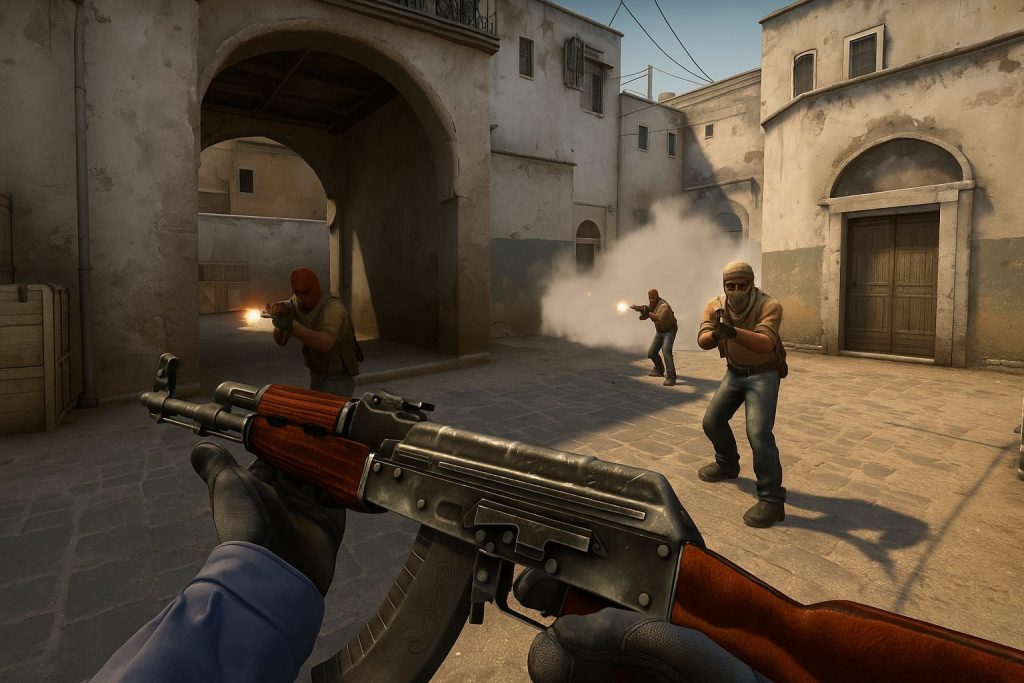
Here’s a quick trick: after every death or round loss, do a mental check-in. Ask yourself:
- Am I playing to win or playing emotionally?
- Am I communicating with the team or complaining?
- Am I still having fun, or am I just angry?
If your answers lean negative, it’s time to reset. You can:
- Take 10 seconds of silence to breathe
- Focus on one small goal (e.g., use utility well this round)
- Compliment a teammate to shift your energy
Monitoring your mind isn’t just helpful—it’s essential to become a consistent CS2 player.
The Science Behind Focus and Performance
Cognitive Load and Decision Making in High-Stakes Matches
CS2 isn’t just about clicking heads—it’s about processing information at lightning speed. You’re constantly analyzing sound cues, enemy patterns, economy, utility usage, and map control. This all adds up to cognitive load—the amount of mental effort your brain can handle at once.
When your cognitive load is too high, your decision-making suffers. You’ll notice:
- Hesitation during clutches
- Forgetting to smoke key angles
- Making the wrong buy decisions
- Misreading the enemy’s strategy
The more intense the match, the more your brain is taxed. That’s why players often struggle in long OT games—they’re mentally drained.
The solution? Reduce unnecessary thinking:
- Use routines and habits (e.g., always smoke mid on Dust2 if T-side)
- Communicate efficiently (short, clear callouts)
- Use mental checklists before pushing a site
Cognitive load management separates great players from erratic ones. The less mental clutter you have, the sharper you’ll be.
The Role of Dopamine and Adrenaline in Gaming
Every time you clutch, frag, or win a round, your brain gets a dopamine spike. This “feel-good” chemical motivates you to keep grinding. But there’s a downside—dopamine is addictive. It can trick your brain into chasing frags or ego plays instead of smart decisions.
Then comes adrenaline—the fight-or-flight hormone. In a 1v3 clutch or match point scenario, your heart rate spikes, your palms sweat, and your body tenses up. This is natural, but too much adrenaline can make you panic or over-flick.
So what can you do?
- Practice deep breathing between rounds
- Limit caffeine if you’re prone to anxiety
- Visualize success in clutch situations before they happen
Understanding your body’s chemical response during CS2 helps you stay calm when it matters most.
How Stress Affects Your Reaction Time and Aim
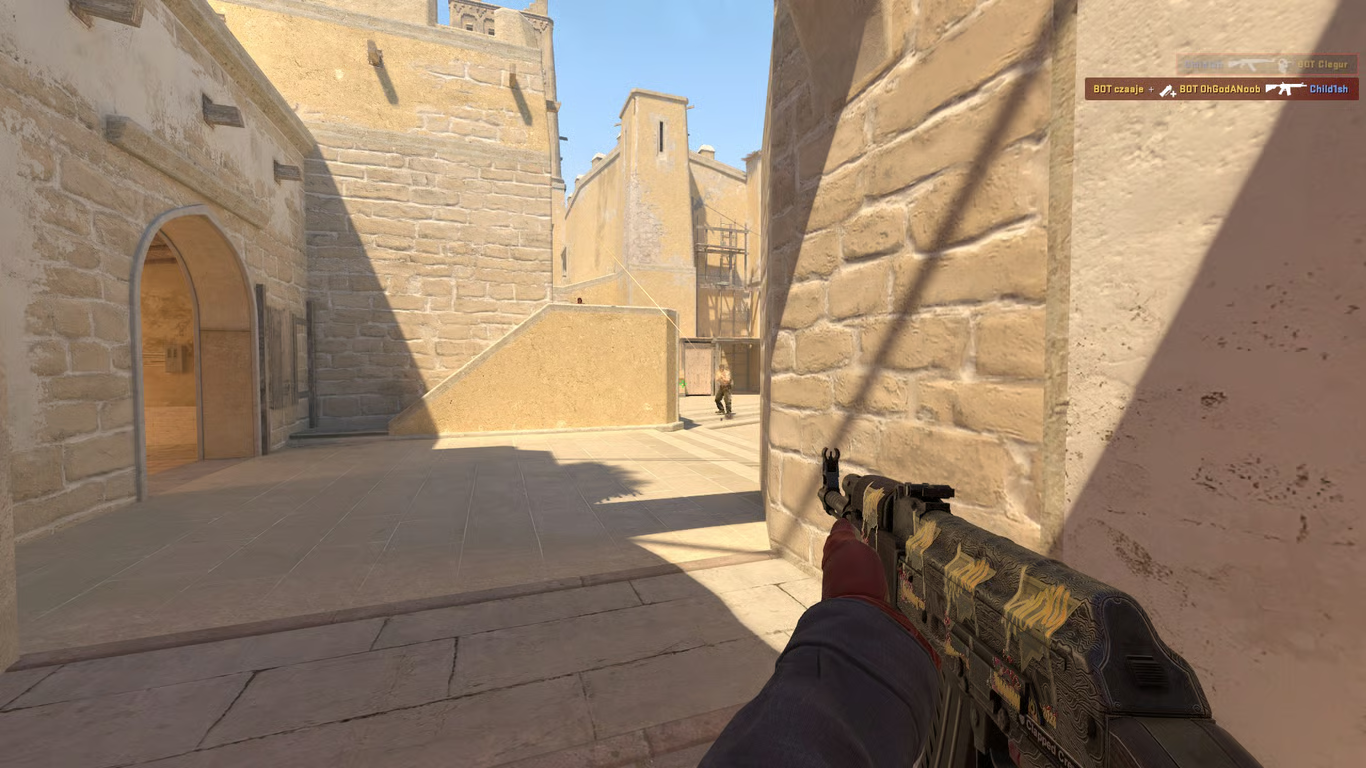
Stress is a performance killer in CS2. Under stress, your brain enters a survival mode. Your tunnel vision increases, your peripheral awareness drops, and your reaction time slows down. That’s why your aim feels “off” during a losing streak.
Also, your muscle memory is tied to your mental state. If you’re panicking, your hand movements become jerky. Your spray control becomes inconsistent. You might second-guess your pre-aims.
To fight this:
- Stay hydrated and stretch to reduce tension
- Use warm-up maps before queuing
- Remind yourself: One round doesn’t define the game
When your stress is in check, your mechanical skill can actually shine.
Pre-Game Mental Preparation Techniques
Setting the Right Intentions Before Playing
Most players hop into ranked with zero mental prep. That’s a mistake. How you start your session defines how it will go.
Instead of just booting CS2 and jumping in, try setting a simple intention like:
- “I will communicate calmly, even if things go bad.”
- “I’ll focus on utility usage this session.”
- “I’m not playing for wins today—I’m playing for growth.”
These intentions help you stay grounded and redirect your focus away from just winning. They act as your anchor when things go south.
Write them down. Say them out loud. Make it a ritual.
Intentions > Emotions.
Breathing Exercises and Mental Warm-Ups
Before athletes compete, they stretch and warm up. Why don’t most gamers do the same?
Start with a 3-minute breathing exercise:
- Inhale for 4 seconds
- Hold for 4 seconds
- Exhale for 6 seconds
- Repeat 5–10 times
This calms your nervous system and clears your head. Combine this with mental warm-ups like:
- Watching a quick pro highlight for inspiration
- Visualizing good spray control or a perfect hold
- Recalling a past moment where you clutched confidently
Get your brain in game-mode before your hands ever touch the keyboard.
Creating a Pre-Game Routine for Consistency
Routines create consistency. Consistency creates confidence.
Here’s a sample pre-game mental routine:
- 10 mins of Aim Botz or deathmatch
- 3-minute breathing reset
- State one intention aloud
- Watch 2 rounds of a demo or VOD
- Queue up with a bottle of water ready
It might feel silly at first, but this structure protects your mindset from chaotic games. You’ll be more mentally locked in and less likely to tilt when adversity hits.
In-Game Focus Strategies
Staying in the Present Moment: One Round at a Time
One of the biggest traps in CS2 is dwelling on past mistakes or worrying about the future. Maybe you just whiffed a spray. Or maybe your team is down 4–11. That noise in your head? It’s killing your focus.
The solution? Reset every round. Forget what just happened and treat each round like it’s the first.
Try these mental resets:
- Say “next round” aloud after a bad play
- Focus on one key thing you can control (e.g., watch flank, trade kills)
- Smile—even if you’re losing. It releases tension and resets mood
The present moment is where all your power is. Live there.
Managing Team Communication and Avoiding Toxicity
Poor comms kill games. Tilted comms kill entire vibes. CS2 demands good communication—but when players tilt, mics turn into flamethrowers.
Here’s how to keep your comms sharp:
- Keep it short and factual: “One mid. Low HP. Flashing.”
- Never insult—even if someone whiffs. Say “unlucky” instead of “bruh, trash.”
- Use a calm tone, especially if others are heated
- Mute when necessary, but do it silently—don’t announce it
You control the energy you bring. Be the anchor, not the storm.
Resetting Mentally After a Bad Round
Bad rounds happen. Everyone messes up—even pros. What matters is how quickly you mentally recover.
Here are fast resets:
- Look away from the screen for 10 seconds
- Take one long breath while holding W or knife out
- Say something positive in chat or voice: “We got this” or “Let’s save and win next”
One bad round doesn’t ruin the game unless you let it. Don’t let a mistake rent space in your head.
Post-Game Reflection and Mental Recovery
Analyzing Without Self-Blame
After a tough loss, your instinct might be to beat yourself up. But self-blame is the enemy of improvement.
Instead, ask:
- What did I do well this match?
- What’s one small thing I can work on next time?
- Was I mentally strong today or did I tilt?
Reflection is not about shame—it’s about learning. Be your own coach, not your worst critic.
If it helps, write your thoughts in a quick journal. Even one sentence helps reinforce growth over regret.
Journaling or Reviewing Demos to Improve Mindset
Start a simple CS2 mental journal. After each session, log:
- Your mood before and after the game
- What tilted you (if anything)
- How you responded to tilt
- What you’re proud of
This helps you track patterns over time. You’ll start noticing trends—like tilting more at night or playing better when you warm up.
Combine this with demo reviews. Not just for mechanics, but body language and comms. Were you patient? Did you rush? Did you sound confident?
Mindset review is just as important as aim review.
Cool-Down Practices to Maintain Long-Term Mental Health
Don’t go from sweating in a CS2 game straight to bed. Your brain needs a cool-down, just like your body does after a workout.
Cool-down tips:
- Stretch or walk for 5–10 minutes
- Write one positive takeaway from your game
- Watch a chill stream or something non-competitive
- Listen to calming music or meditate
This helps you disconnect emotionally from intense games. You’ll sleep better, feel better, and avoid burnout.
Building Resilience Over Time
Embracing Failure as Part of Growth
Let’s be honest—failure stings. Whether it’s getting out-aimed in a duel or throwing a clutch round, the frustration can sit with you long after the match ends. But here’s the thing: every top-tier CS2 player has failed, repeatedly. What separates them isn’t that they avoid mistakes—it’s that they learn from them.
Resilience is the mental skill of bouncing back, and it begins with your attitude toward failure. Instead of seeing it as proof you’re “bad,” start viewing it as feedback. That missed shot? A reminder to fine-tune your crosshair placement. That misread rotation? A sign to watch more demos or improve map awareness.
You’ll never grow if you’re afraid to fall. The most powerful shift in your CS2 journey is when you stop fearing losses and start embracing them as the path to mastery. Reflect on your tough games not with shame, but curiosity. What did they teach you? What would you do differently?
Train yourself to say: “Good. Now I know what to work on.”
Developing Grit and Mental Endurance
You can be the most mechanically gifted player on the server, but if you lack grit, you’ll crumble when things go wrong. Grit is that grind-it-out mentality—the ability to keep showing up and pushing forward even when you feel like rage quitting.
Building grit in CS2 means embracing long-term progress over short-term satisfaction. It’s showing up for practice even when you’re losing ELO. It’s staying calm during a 1–14 game and still trying to win the next round. And most importantly, it’s staying mentally engaged when your whole team gives up.
Here’s a simple way to build grit: set small, consistent goals. For example, “Play 5 games this week with calm comms, no matter the outcome.” The more you follow through, the more mental strength you build. Grit isn’t about ego—it’s about discipline and inner drive.
The Importance of a Supportive Gaming Community
No one thrives in isolation. CS2 is a team game, and your mental game is directly influenced by the environment you play in. If you’re constantly surrounded by negativity, toxicity, or ego-driven teammates, it’s no surprise your mental health takes a hit.
That’s why it’s crucial to surround yourself with like-minded players who uplift rather than tear down. Join a Discord server where constructive criticism is welcomed. Build a five-stack of friends who focus on improvement rather than scoreboard stats. Even one supportive teammate who hypes you up after a good play can reset your entire mental state.
A positive community isn’t just nice—it’s a mental health tool. You’ll learn more, grow faster, and enjoy the game again. Don’t underestimate the power of a team that believes in you—even when you don’t believe in yourself.
Tools and Apps for Mental Training
Meditation Apps Designed for Gamers
Believe it or not, meditation isn’t just for yoga enthusiasts—it’s a powerful mental training tool for gamers. Apps like Headspace, Calm, and even GamerMind offer short, guided meditations specifically tailored to improve focus, stress control, and emotional regulation.
You don’t need to meditate for an hour a day. Even 3–5 minutes before a match can prime your brain for better decision-making. Some of the best meditation sessions for CS2 players include:
- Pre-game calm: To reduce nerves and adrenaline
- Post-loss recovery: To shake off frustration after a tilt
- Focus booster: To increase presence during long matches
You might feel silly at first, sitting with your eyes closed and breathing deeply—but once you experience the clarity it brings, it becomes part of your game-day ritual.
Focus Timers and Break Reminders
During intense gaming sessions, it’s easy to get sucked into match after match until your brain feels fried. That’s where focus timers and break reminder apps come in handy. Tools like Pomodoro timers (25 minutes on, 5 minutes off) can structure your play sessions for optimal mental stamina.
For example, after three matches, take a 15-minute break. Stretch. Walk. Drink water. Reset your brain. These intentional pauses help prevent mental fatigue and preserve your cognitive sharpness deeper into your session.
Also, try apps like Stretchly or Time Out—they automatically remind you to take breaks. Your mind isn’t designed for four hours of back-to-back competitive queues without a pause.
Using Wearables to Track Stress and Focus
If you’re serious about peak performance, consider investing in wearables like the WHOOP band, Oura Ring, or even a Fitbit. These devices can track sleep, heart rate, and even stress levels, giving you insight into how your physical state influences your mental game.
For example:
- High resting heart rate? You may be over-caffeinated or anxious.
- Poor sleep last night? That could explain slower reflexes.
- Elevated stress? Time to skip the queue and go for a walk.
When you treat your brain like a pro athlete treats their body, your gameplay rises to another level. Data-driven decisions = smarter mental health management.
How Professional CS2 Players Handle Tilt
Mindset Hacks from Top Tier Pros
Top CS2 pros deal with tilt just like you do—but the difference is, they’ve developed habits and mental frameworks that protect their performance. Players like s1mple, NiKo, and ZywOo don’t just rely on aim—they rely on resilience, mental discipline, and emotional control.
Many of them use techniques like:
- Mental resets after bad rounds (e.g., looking away from the screen briefly)
- Mantras or affirmations (“It’s just one round” or “Next round, new game”)
- Strict routines to ensure they’re mentally fresh every match
Some pros even work with sports psychologists or performance coaches to fine-tune their mental game. If they take this part of CS2 seriously, why shouldn’t you?
Interviews and Quotes That Inspire
Want a real boost of motivation? Study what the best players say about mindset:
- ZywOo: “When I lose, I just think about the next round. It’s the only one that matters.”
- device: “I don’t let one death define the game. The match isn’t over until the scoreboard says it is.”
- s1mple: “The best way to win is to stay calm, even if everything around you is falling apart.”
These aren’t just quotes. They’re mental blueprints. If you start internalizing this kind of thinking, your approach to CS2 transforms from reactive to resilient.
Their Practice Routines and Mental Conditioning
Behind every highlight reel is hours of intentional practice and mental work. Pros don’t just hop into a DM server and call it a day. They:
- Review demos with a focus on mindset and decision-making
- Warm up their aim and their focus
- Take scheduled breaks to avoid burnout
- Prioritize sleep, nutrition, and recovery just like athletes
Their edge isn’t magic—it’s discipline. If you want to reach even 10% of their consistency, start treating your mental preparation with the same importance as your aim routine.
Creating a Mental Performance Plan
Daily and Weekly Habits for Mental Fitness
Just like aim improves with regular practice, your mental game also sharpens with daily and weekly habits. You can’t expect to stay mentally strong in clutch moments if you’re only reacting to problems as they happen. You need a mental training routine, just like your mechanical one.
Here’s how a daily plan might look:
- Before playing: 5-minute breathing or focus warm-up
- During matches: Intentional communication and emotional check-ins
- After playing: Quick reflection—what went well, what needs work
And weekly:
- Review 1–2 demos focusing on decision-making, not just frags
- Journal about tilt triggers and mindset improvements
- Evaluate if you’re reaching your intention-based goals (not just rank)
These habits build mental momentum. The more you do them, the more naturally they kick in during stress.
Think of it like gym reps for your brain. You don’t wait until you’re weak to start working out—you build strength every day.
Goal Setting: Micro vs Macro Wins
Everyone wants Global Elite, but that’s a macro goal—a long-term vision. If that’s all you focus on, every small loss feels like a massive setback. Instead, break your goals down into micro wins—small achievements that build confidence and keep you motivated.
Examples of micro wins:
- “I didn’t tilt this game, even though we lost.”
- “I used utility better this match.”
- “I kept calm and made good calls.”
These are the real victories that lead to rank ups over time. Make your goals about performance and mindset, not just ELO.
Set macro goals (e.g., “Reach Supreme in 6 months”), but feed them with micro wins daily. That’s how real progress is made.
Accountability and Progress Tracking
One of the best ways to stay consistent is by tracking your progress. Keep a simple log of:
- Sessions played
- Mindset before/after
- Key lessons learned
- Times you overcame tilt or stayed focused
You can use Google Sheets, a physical notebook, or even a journaling app. The point is to create a feedback loop. This helps you stay aware of what’s working, what’s not, and how far you’ve come.
Want extra motivation? Share your journey with a friend or coach. External accountability makes you more likely to stick to your mental goals—and helps you celebrate the small victories along the way.
Nutrition and Physical Health for Mental Sharpness
Brain-Boosting Foods and Supplements
What you eat directly affects how you think and react in-game. Your brain needs proper fuel to maintain focus, process decisions quickly, and regulate your emotions. Junk food might give you short-term energy, but it crashes hard, making you slower and foggier.
Here are some great brain-boosting foods:
- Blueberries: Improve memory and focus
- Nuts & seeds: Packed with omega-3 and magnesium
- Salmon or tuna: High in brain-friendly fatty acids
- Eggs: Great source of choline, which helps memory
- Green tea: Enhances alertness without the caffeine jitters
Supplements like L-theanine, omega-3 capsules, and nootropic blends (used responsibly) can also enhance focus. Just be sure to consult a professional before starting anything new.
Fuel your mind like a pro—not a fast-food junkie.
The Role of Sleep in Focus and Tilt Control
Sleep isn’t optional—it’s essential. A single night of poor sleep reduces your reaction time, clouds your decision-making, and makes you more emotionally reactive. Basically, it’s a recipe for tilt.
Aim for 7–9 hours of good-quality sleep. And before you say “I’m fine on five,” you’re not. You’ve just adapted to feeling subpar.
Some sleep tips for gamers:
- No screens 30 minutes before bed (yes, even TikTok)
- Use blue light filters or glasses if you play late
- Avoid caffeine after 5 PM
- Keep your room cool and dark
Sleep isn’t lazy—it’s performance optimization. Treat it like a scrim. Show up rested, or don’t show up at all.
How Physical Activity Enhances Mental Game
Regular physical activity has massive benefits for mental performance. Exercise increases blood flow to the brain, reduces stress hormones like cortisol, and boosts endorphins—the feel-good chemicals that help regulate emotion.
You don’t have to hit the gym like a bodybuilder. Even a 15-minute walk, 20 minutes of yoga, or quick stretching between matches can:
- Clear your head
- Release tension
- Improve posture and prevent gaming fatigue
Some of the top CS2 players work out regularly—not just for health, but because it improves focus and reduces tilt. A stronger body supports a sharper mind.
Avoiding Burnout in Competitive CS2
Recognizing Burnout Before It’s Too Late
Burnout doesn’t always show up as exhaustion. Sometimes it’s apathy. You log into CS2, not because you’re hyped, but because it’s habit. You tilt faster. Your matches feel meaningless. That’s burnout creeping in.
Here are signs you might be burning out:
- You feel annoyed just loading into a match
- You’re playing out of obligation, not enjoyment
- You get irrationally angry at small mistakes
- You’re not learning or improving—just surviving
If this sounds like you, it’s time to step back before your love for the game disappears entirely.
Balancing Practice with Other Life Activities
The best players aren’t the ones who grind 12 hours a day—they’re the ones who balance their gaming with life. Spend time away from the screen. Hang out with friends. Pick up a hobby that doesn’t involve aim training.
Balance gives your brain space to breathe. It lets your mental circuits cool down, so you return to the game with fresh eyes and motivation.
Set limits. Schedule breaks. Make life outside CS2 a part of your long-term gaming strategy.
Knowing When to Take a Break
Sometimes, the bravest move isn’t pushing through—it’s stepping away. A short break can reset your mindset, refocus your goals, and reignite your love for the game.
You’re not “quitting.” You’re resetting.
Whether it’s a weekend off or a few days without competitive queues, give yourself permission to take a breather. You’ll come back stronger—and happier.
Customizing Your Mental Strategy Based on Role
In-Game Leaders vs Entry Fraggers: Different Mindsets
Your role in the game affects your mental responsibilities. As an In-Game Leader (IGL), you have to stay calm, organized, and clear—even when everything falls apart. You’re the team’s mental anchor.
Your stress doesn’t just affect you—it affects the entire team. That’s why IGLs must develop:
- Emotional neutrality (no overreacting)
- Rapid decision-making under pressure
- Encouraging but honest communication
On the other hand, entry fraggers need confidence and fearlessness. They’re the tip of the spear. A tilted entry is a hesitating entry—and that often leads to failure. For them, the mental game is about:
- Letting go of deaths quickly
- Believing in their role
- Maintaining aggression without ego
Each role needs a customized mindset. Know yours. Train accordingly.
Support Roles and Staying Calm Under Pressure
Support players often don’t get the spotlight, but they carry enormous mental weight. They’re the glue. The utility masters. The clutch savers.
Your mental job as a support? Stay steady and dependable, even when the game is chaos. Your calm is contagious. If you panic, the rest might too.
Train yourself to:
- Stay focused on setups and timing
- Speak up when teammates need utility, not just when asked
- Keep comms positive even when under pressure
You’re not just a player—you’re a stabilizer.
How Awpers Can Manage High-Pressure Situations
Awpers deal with a unique mental burden: one shot often means everything. That pressure builds fast—and can lead to fear-based hesitation or over-aggression.
Strong Awpers master:
- Composure in 1vXs
- Trusting their muscle memory
- Failing forward (e.g., missing a shot but not losing confidence)
It’s okay to miss. What matters is that you stay mentally poised, especially when all eyes are on you to win the round.
Conclusion: Elevating Your CS2 Mental Game
CS2 is as much a mental game as it is a mechanical one. If your head isn’t in the right place, it doesn’t matter how perfect your crosshair placement is. To truly rise through the ranks and perform consistently, you must treat your mind as seriously as your aim.
From recognizing tilt triggers and managing stress, to building resilience and creating a mental performance plan, the tools are all there. It’s up to you to implement them.
Remember, the greatest players aren’t just sharp shooters—they’re mental warriors. Start small. Practice daily. Build strength from the inside out.
You’ve got the skill. Now build the mindset.
FAQs
How do I stop getting tilted so easily in CS2?
Start by identifying what specifically triggers your tilt. Once you’re aware, you can develop personalized coping mechanisms—breathing exercises, muting teammates, or simply taking a round to reset your mindset.
What’s the fastest way to regain focus during a losing streak?
Take a short break between matches. Physically get up, stretch, hydrate, and breathe. Clear the slate. Then queue up again with a fresh mindset.
Are there any mental coaches for gamers?
Yes, there are professional performance coaches who specialize in esports psychology. Some offer one-on-one coaching or group workshops specifically for games like CS2.
Does taking a break mid-session really help with tilt?
Absolutely. Even a 5–10 minute pause can reset your adrenaline levels and restore cognitive clarity. Regular breaks actually improve your performance over time.
What should I do after an extremely frustrating loss?
Reflect instead of rage. Write down what happened, how you felt, and what you could do better next time. Let yourself cool off before jumping into another match.