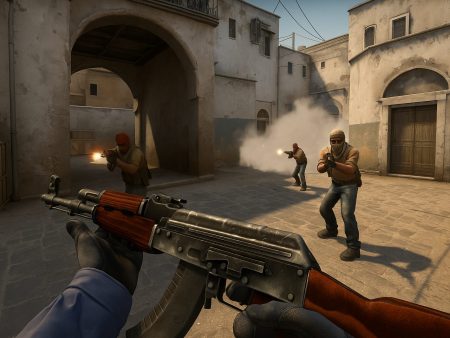
Master the art of eco rounds in CS with top-tier strategies for both T and CT sides. Learn effective low-buy tactics, weapon choices, utility usage, and pro tips to win rounds even with minimal economy.

In Counter-Strike, not every round is about full buys and flashy plays. Some of the most crucial moments come during eco rounds—those tense, low-economy rounds where your team is strapped for cash. An eco round, short for “economy round,” is when your team decides not to spend much (or any) money on weapons and utility, instead saving for a better buy in the upcoming round.
Why do teams go for eco rounds? It’s all about managing the in-game economy. After losing a few rounds or making a big investment in a failed buy, a team might find itself broke. Rather than continually forcing subpar buys and bleeding money, it’s often smarter to save. Eco rounds are strategic pauses in your economic cycle, meant to regroup and stabilize.
There are different types of eco rounds, ranging from full ecos—where players literally buy nothing but maybe a flashbang or two—to semi-ecos, where players invest in a pistol upgrade or a piece of armor. The goal isn’t always to win the round but to cause damage, steal a weapon, or at least force your opponent to spend more in the next round.
Despite having limited equipment, eco rounds aren’t throwaways. With good strategy, team coordination, and a bit of luck, you can absolutely win them. And when you do, the momentum swing is massive. That’s what makes eco rounds so thrilling and essential to master.
Importance of Eco Rounds in Competitive Play
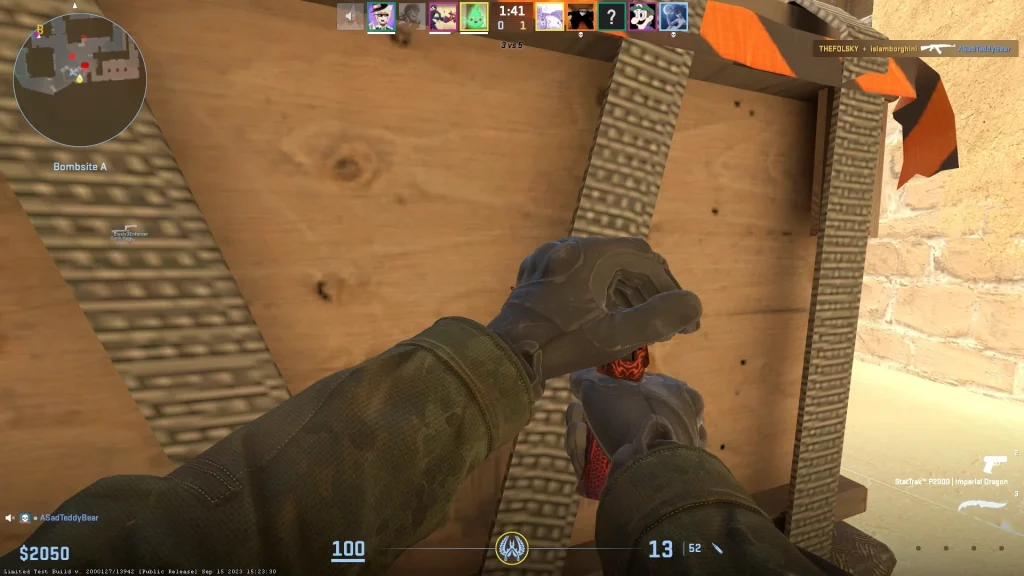
Eco rounds are like chess gambits in CS—risky but potentially game-changing. At the highest levels of play, winning or losing an eco round can dictate the flow of an entire half. Pro teams don’t treat eco rounds as time-killers—they use them to gather intel, chip away at their opponent’s economy, and occasionally pull off surprise upsets.
Let’s be real—watching a team win with just pistols and no armor is one of the most exciting moments in a match. But beyond the spectacle, there’s a method to the madness. Teams plan these rounds meticulously. Some bait enemies into close-range fights; others use tight angles, stack bombsites, or try fakes with limited utility.
Eco rounds also test your fundamentals: positioning, communication, patience, and timing. When you don’t have firepower, you need to rely on brains and teamwork. They sharpen your decision-making under pressure, which is a valuable skill for players of all levels.
Another key aspect? The economic damage you can cause. If you kill two or three opponents and make them rebuy expensive rifles and full utility, you’ve done your job—even if you lose the round. In CS, economics is a tug of war, and eco rounds are your chance to yank the rope back, inch by inch.
Understanding the Economic System in CS

How the In-Game Economy Works
The Counter-Strike economy system is the backbone of how every match flows. You earn money by getting kills, planting or defusing the bomb, and winning or losing rounds. But not all actions earn equal pay. For example, getting a kill with an SMG might net you more money than with a rifle. And the amount of cash your team receives after a round loss or win varies based on streaks and actions.
After a few losses in a row, your team begins to get “loss bonus” money—this is Valve’s way of helping you catch up. On the other hand, if you win a round but lose multiple players, your rebuy can leave you broke. Managing this balance is critical.
When you’re broke (below $2000–$3000 per player), you often have two choices:
- Full Eco: Save completely, allowing full buys next round.
- Semi-Eco: Buy upgraded pistols, light armor, maybe a nade or two.
Deciding when and how to eco isn’t just about money—it’s about momentum, scoreline, and even your opponent’s playstyle. Eco decisions should always be team-wide. If one player buys a deagle and armor while others save, that lack of coordination can cost you dearly.
When to Call an Eco Round

Timing an eco round right is crucial. Call one too late, and you might throw away your economy. Call one too early, and you may miss a critical chance to swing the match.
Here are some ideal situations to call an eco:
- Your entire team has less than $2000.
- You just lost a round with 0–1 players surviving.
- You lost a force buy and need to stabilize.
- You want to surprise your opponents after multiple gun rounds.
Some teams even throw in a “tactical eco” after winning a round, anticipating an opponent’s force buy or risky strat. It’s all about thinking ahead.
Understanding the money meta—your own economy and your opponents’—is what separates average players from the strategic masterminds.
Difference Between Full Eco and Semi-Eco
Let’s break it down simply.
- Full Eco: No purchases, maybe one flashbang. Your goal is to save as much money as possible. Often used when you’re really broke or preparing for a big buy next round.
- Semi-Eco: You buy light gear—deagles, P250s, armor, maybe a flash or smoke. These are “let’s try to win or at least get some kills” rounds.
There’s also the “Hero Buy”, where one player goes all in with a rifle or AWP while others save. This can be high-risk, high-reward if that player gets early impact or drops a weapon after dying.
Knowing which type of eco to call—and executing it as a team—is what makes eco rounds winnable and, at times, devastatingly effective.
General Principles of Eco Rounds
Key Objectives During an Eco Round
You’re not just running around hoping for the best. Eco rounds have clear objectives:
- Deal economic damage by killing enemies or forcing rebuy.
- Recover a dropped weapon and possibly save it.
- Get a bomb plant for the T side bonus.
- Force utility usage from CTs.
- Survive to carry over equipment or preserve loss bonus.
Sometimes, winning the round isn’t the main goal—it’s about setting up the next few rounds. That’s the strategic layer most players overlook. Letting two CTs over-rotate, then planting on the empty site, is a win in itself—even if you don’t hold the post-plant.
Play smart, play together, and always play with a plan.
Eco Round Strategies for T Side
Group and Trade Strategy
When you’re on the Terrorist side with barely any cash, your greatest weapon is teamwork. Sticking together as a group allows you to trade kills effectively, even if you’re only holding pistols. Grouping up negates the individual weapon disadvantages and gives you a shot at turning low-economy rounds into favorable trades. Why does this work? Because pistols are most effective at close range and when your team can overwhelm one or two defenders with sheer numbers.
The best approach here is to designate one entry point—typically a chokepoint like B Apartments on Mirage or Short on Dust2—and push together. Have the first player try to bait out shots or utility, allowing the others to swing wide and trade. Don’t worry if the first guy goes down—that’s part of the plan. The second and third in line are there to immediately punish the defender who just revealed their position.
Trading is the key term here. A successful eco round isn’t about taking duels individually; it’s about overwhelming, trading effectively, and picking up dropped rifles. Once you secure a kill and grab a weapon, your chances of taking the site and planting the bomb skyrocket. Every gun you steal is one less expensive rebuy the other team can make.
Also, consider layering in a flashbang or two. Even one $200 flash can blind a site defender long enough to help your group get on site and make a move. In short, T-side eco rounds should always be centered around togetherness, trading, and targeting close-quarter engagements.
Stack and Rush Tactics
Sometimes, you just want to catch the CTs completely off guard. That’s where rush tactics come in—especially effective in eco rounds when speed and chaos can level the playing field. Whether it’s a B rush on Inferno or a full-on charge through A Ramp on Mirage, these plays thrive on timing and unpredictability.
But don’t confuse rushing with brainless pushing. A good rush needs to be coordinated. Everyone should know the route, when to throw flashes, and which angles to check. Pick a site, stack five players, and call the go. The key to this is using any utility you have smartly: throw a pop flash to blind the anchor player, smoke off a choke, or molly out common spots (if you can afford it).
A classic example is the “dust2 B rush.” Stack five T’s in Upper Tunnels, throw a flash over the wall or under the window, and burst into site before the CTs can rotate. Even with just pistols, you have a good chance to overwhelm the B anchor and get the bomb down. That bomb plant alone nets your team $800 per player—huge for an eco.
This strategy also plays on CT habits. Many defenders will assume you’re playing slow or default, especially after several eco rounds. Hitting them fast while they’re unprepared gives you that vital upper hand.
Bait and Switch Approaches
The art of deception thrives in eco rounds. With no rifles to rely on, baiting CTs into over-rotating or exposing themselves is an incredibly effective tactic. This is where bait and switch strategies shine.
Let’s say you have one player show presence and make noise on A Ramp with a few glocks. The CTs see this and call for a rotate. Meanwhile, the rest of your team is waiting quietly outside B. Once you see the CT utility flood A or hear the rotates, boom—you hit B with four players and an open site.
This kind of misdirection only works if your team is disciplined and quiet. The bait has to feel real, but not obvious. Shoot a few bullets, throw a flash, maybe even jump peek. Just enough to draw attention without sacrificing too much.
Another twist on this is “throwing the fake execute.” If your team has a couple smokes or flashes, execute like you’re going A with full force. Drop the smokes, toss a flash, and wait a beat. When the CTs rotate or push aggressively for info, punish them.
Bait and switch strategies turn your lack of firepower into an asset—you trade brute force for brains.
Using Decoys and Flashbangs Effectively
Decoys might seem like a joke, but in eco rounds, every piece of utility counts. Dropping a decoy grenade in one area can mask footsteps or simulate presence. For example, tossing a decoy on A while your team walks up Mid can draw attention and mislead the CTs. They’re cheap, and they can buy you just enough distraction to shift the balance.
Flashbangs, on the other hand, are arguably the most powerful eco-round utility. A well-placed pop flash can blind a rifle-holding CT and give your team a free kill. Practice these flashes. Know your maps. One blind CT can lead to a rifle pickup and suddenly a winnable round.
Even better? Stack flashes. Two or three players buying one flash each gives you plenty of opportunities to flash into site, blind rotating defenders, or even delay defuse attempts after the plant.
In short, cheap utility can create premium opportunities.
Executing a Perfect Glock Train
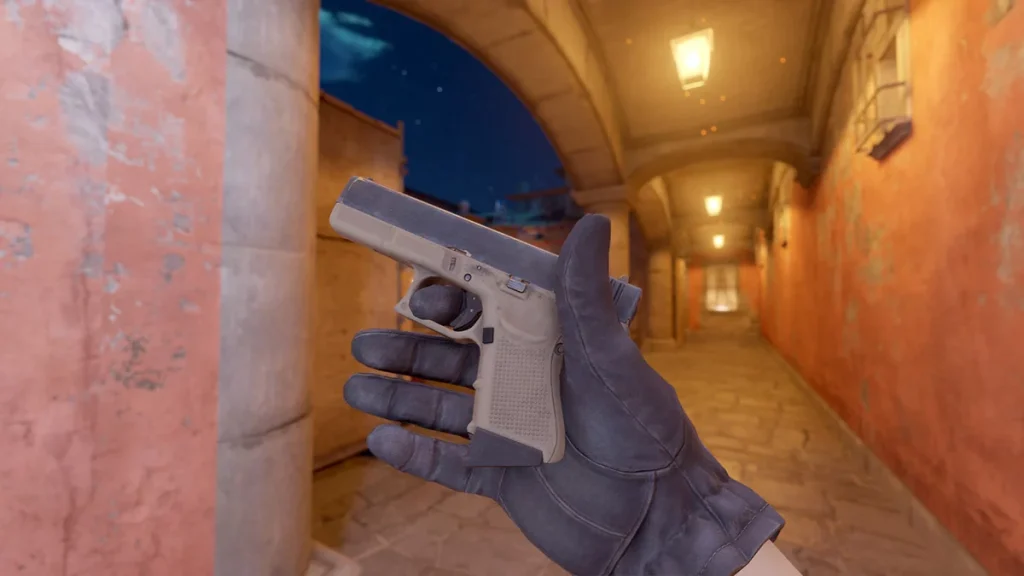
We’ve all heard the jokes about glocks being pea shooters—but in the right hands, even these default pistols can be deadly. The “Glock train” strategy is simple yet effective: stack five Ts, stick close, and rush into tight spaces like a stampede.
The idea is to overwhelm defenders with speed and numbers. Push through mid doors on Mirage, storm into connector on Overpass, or blast through banana on Inferno. The tighter the space, the better. A lone CT holding with an M4 often can’t kill more than one before being swarmed.
Here’s how to perfect the Glock train:
- Stick shoulder-to-shoulder.
- Don’t stop moving.
- Have one or two players jump peek or bait.
- Pick up the dropped weapon instantly.
- Plant fast if you clear the site.
You won’t win every Glock train round—but it’ll always give you a chance to disrupt the CT setup, damage their economy, and maybe even walk away with a bomb plant or rifle.
Eco Round Strategies for CT Side
Site Stack and Gamble Setup
On CT side, eco rounds are tougher because you have to react to the T’s strategy, not dictate it. That’s where site stacking comes into play. Instead of spreading out 2-1-2 and getting picked off, CTs can commit 3 or 4 players to one site, betting that the Ts will come their way.
It’s a gamble, but a calculated one. If you read the T side habits correctly or hear early audio cues, this setup can catch them off guard. Even better, if you’re eco and they hit your stacked site, you might turn the round on its head.
There are two types of stacks:
- Hard Stack: 4 players on one bombsite, 1 on the other just spotting for info.
- Soft Stack: 3 players on one site, 1 rotator, 1 holding long-range angle or lurking for flank.
The hard stack is riskier but offers higher reward. Use sound cues, early aggression on one side, or even decoys to help guess where to stack. Many teams also combine stack with crossfires, setting up close-range angles with pistols to mow down attackers.
Don’t underestimate the psychological effect, either. If Ts walk into a stack and lose a round to USPs, their confidence will take a hit.
Playing for Close Angles and Surprise Kills
Close-range pistol play is the bread and butter of CT eco defense. Rifles dominate at long range, but pistols like the Five-Seven, CZ, and P250 excel in tight corners and fast peeks. That’s where you want to play on eco rounds.
Your job is to hold angles where you can one-shot headshot or quickly double-tap. Think:
- Right outside of B apps on Mirage
- Close banana logs on Inferno
- Behind the box on A ramp
Add in off-angles—positions Ts don’t usually check—and you’ve got a recipe for free kills. Just remember, it’s not about holding for long. Take your shot, fall back or reposition, and let your teammates swing off the distraction.
Ambush kills are even more devastating in eco rounds because you can steal weapons. If a T peeks without checking and you grab their AK, that’s a massive power shift mid-round.
Weapon Selection in Eco Rounds
Best Pistols for T and CT Sides
Pistol selection can make or break your eco round. Not all pistols are created equal, and knowing which one to pick for your side is crucial to maximizing your impact.
For T Side:
- P250 – Cheap and effective, the P250 is a solid upgrade from the Glock. It’s capable of killing armored opponents with a few well-placed shots and is very affordable at $300. Ideal for eco rounds when you’re trying to secure a headshot in tight situations.
- Tec-9 – A beast at close range, the Tec-9 is a popular choice for aggressive T-side ecos. Its high fire rate and mobility make it deadly when rushing sites or trading kills with teammates.
- Deagle – The king of one-taps. If you’re confident in your aim, the Deagle is a high-risk, high-reward pistol. At $700, it’s a heavy investment, but just one kill can turn the tide of a round—especially if you recover the enemy’s weapon.
- Glock – While weak overall, it still has potential in group rushes. The key is quantity over quality—swarm defenders with numbers.
For CT Side:
- Five-Seven – This pistol is fantastic for eco plays. High armor penetration, great damage output, and a solid magazine size make it a close-range powerhouse.
- CZ75-Auto – Great for surprise kills but tricky to master. Its automatic fire can drop opponents fast in tight spaces, but its small mag and accuracy issues make it risky.
- USP-S/P2000 – Your default pistol. Strong long-range potential with clean headshots, especially when holding narrow angles.
- Deagle – Just like on T side, it’s the eco game-changer. Landing one clean shot can create a domino effect if you pick up a dropped rifle.
Knowing when to spend $300 on a P250 versus $700 on a Deagle depends on your strategy. Are you trying to win the round or just get a kill and save a rifle? Always match your pistol choice to your round objective and playstyle.
Shotgun and SMG Cheese Plays
Sometimes, eco rounds call for creativity—and nothing says cheese like a well-timed shotgun or SMG play. If you’ve got just enough cash for a buy but want to throw your opponents off, investing in a cheap close-range weapon can do the trick.
Shotguns like the Nova or Mag-7 are dirt cheap and absolutely lethal up close. Especially on maps like Inferno (holding apartments) or Mirage (under balcony), a shotgun can net an easy kill or two and give you $900 per frag. Plus, that’s utility damage—your opponent now has to rebuy.
SMGs, on the other hand, are great for mobility and bonus cash. The MP9 (CT side) and MAC-10 (T side) are fast, spray-friendly, and rewarding. Use them to push aggressive angles or hold tight corners. Bonus: SMG kills give you $600, so even if you don’t win the round, you’re still improving your economy.
These weapons work best when:
- You’re defending narrow spaces.
- You expect a full buy from the enemy and want to surprise them.
- You’re playing close to an eco but want to invest for early kills and pressure.
Use them as part of a stack or aggressive push. You might not win the round, but you can wreak havoc on the enemy economy, and that’s often more valuable.
When to Buy a Scout or Deagle
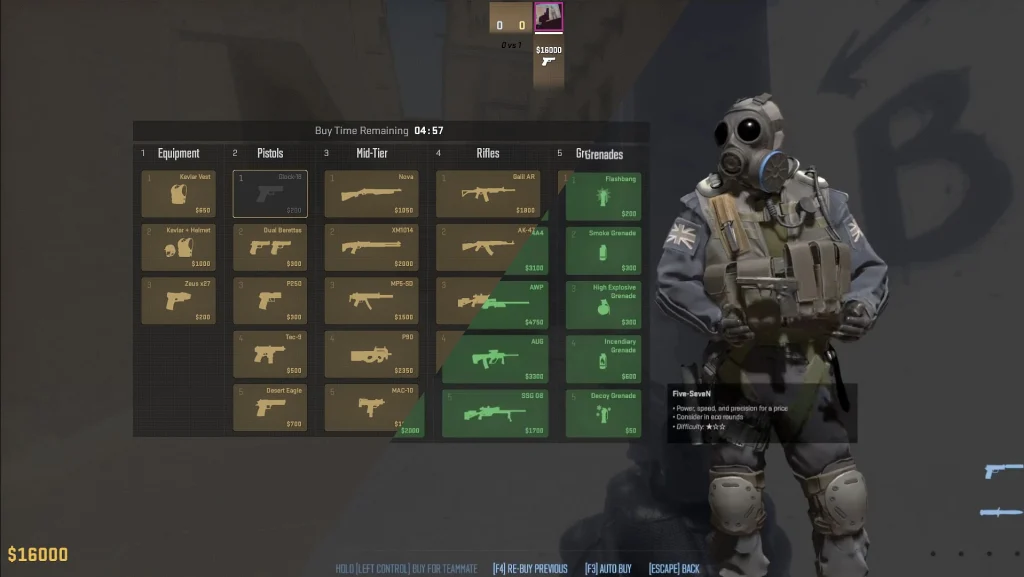
The Scout (SSG 08) is a surprisingly strong buy on eco and force rounds—especially on CT side. Priced at $1700, it’s one of the few rifles you can afford when your money’s tight. In the hands of a skilled player, the Scout can:
- One-shot kill enemies without armor.
- Tag enemies for teammates to finish off.
- Hold long-range angles and delay pushes.
Combine it with a Deagle or P250 and you’ve got a budget AWP/sniper hybrid setup that’s deadly when used right. If you’re playing maps like Dust2, Overpass, or Mirage, the Scout can be the centerpiece of your eco plan. Place your best aimer on long or mid, give them a Scout, and support them with flashes and bait peeks.
The Deagle, meanwhile, is a high-risk eco favorite. But it’s important to remember: if no one on your team has utility or armor and five players are buying Deagles, you’re basically flipping a coin. To be effective, only one or two players should Deagle up while the rest support with pistols and utility.
If your aim’s on point and you understand peeking mechanics, the Deagle can win rounds on its own. But if you’re missing shots, you’re just handing over $700 investments with no return.
Balance is everything—don’t go Deagle-crazy unless your team is backing it up.
Utility Usage in Eco Rounds
Value of a Well-Timed Flash or Smoke
Utility is often underused in eco rounds—but it can be the most cost-efficient investment you make. For just $200, a flashbang can win you a fight or a bomb plant. A smoke can isolate angles and deny pushes. Even with low firepower, utility can help you create openings.
Key uses of utility in eco rounds:
- Flashing into sites before a rush (especially on T side).
- Smoking off choke points to isolate fights.
- Delaying pushes on CT side to buy time or bait rotates.
- Countering executes by faking presence with smokes/decoys.
The idea is to play smarter, not harder. With minimal investment, your team can simulate a full buy execute and throw off the CTs, forcing panic rotations or poor utility usage on their side.
If even one player per eco round commits to a flash or smoke, your team suddenly has options—you’re not just running into the meat grinder anymore.
Faking Executes with Minimal Utility
Fakes are especially effective in eco rounds because CTs often expect slow, cautious play. Throwing a smoke on A site and a couple of flashes over the top can make it look like a full commitment, pulling CT rotations and giving your real push—on B, for example—a much higher chance of success.
You can also use decoys and running footsteps to simulate numbers. With proper coordination, three players can sound like five.
Timing is everything. Toss utility, wait for the reaction, and then hit your real target with pace. These low-cost mind games only work once or twice per half, so use them sparingly—but use them smartly.
Communication and Team Coordination
Calling the Right Eco Strat
Eco rounds require decisive and unified calls. Without coordination, they quickly devolve into chaos—players take individual fights, spacing falls apart, and the round ends before it begins. But when one clear strategy is called and everyone commits, eco rounds become far more dangerous.
A good IGL or shot-caller knows the strengths and weaknesses of the team and maps out eco strats accordingly. Should you stack and hit fast, or bait and rotate? Do you play for damage or go all in for the win? These questions must be answered before the round begins—not mid-round.
Best practices:
- Decide early in freeze time. Don’t hesitate.
- Call clear roles: who’s entry, who’s flashing, who’s holding flank.
- Make backup plans: “If A fails, we rotate B.”
You don’t need a 10-step strat. Just a basic plan and good communication can flip a round. For example: “Rush B apps. Deagle entry, flash over, try to get bomb down. If two die instantly, fall back and save.” That simple call gives your team structure and focus—exactly what an eco round needs.
Maintaining Morale During Eco Rounds
Eco rounds can feel hopeless, especially after a string of lost buys. But this is exactly when team morale matters most. Losing one or two ecos in a row can tilt even experienced players—but staying mentally strong is what separates good teams from great ones.
Positive communication is key. Acknowledge small wins: a bomb plant, a kill, forcing a rebuy. These aren’t wasted rounds—they’re investments in future success. Remind your team of that. A round might be lost on the scoreboard, but won in economy damage.
A single eco round win can shift momentum. That’s why it’s critical to approach every round—even low buys—with intention and optimism. Avoid frustration, sarcasm, or blame. Instead, say:
- “Nice eco, we made them spend.”
- “We’re close, let’s tighten trades next round.”
- “We forced them to rebuy—next round is ours.”
That mindset keeps the team locked in, focused, and ready for a comeback.
Sharing Dropped Weapons and Upgrades
Even in eco rounds, team play matters. Say you kill a CT and snag an M4. That weapon might be more valuable in a teammate’s hands—someone with armor, or someone playing the entry role.
Smart teams drop rifles to their strongest players or set up bodyguard plays, where two pistols protect a rifler. If you pick up a gun with five bullets, hand it to your clutch player. If your lurker has a great position, toss them the Deagle you just picked up.
Also, communicate about saving. If you snag an AK late in an eco round but have no chance to win, save it. Your team can buy around it next round, giving you a stronger buy than expected.
Eco rounds are resource management puzzles. Share the pieces and solve them together.
Adapting to Opponent Patterns
Punishing Overconfident Enemies
Once opponents realize you’re eco, many will get greedy—pushing aggressively, holding forward positions, and going for easy stats. This is where you flip the script.
Read the over-aggression and bait it. Play anti-flash, hold tight angles, and wait for that CT to swing with confidence. Punish him, grab the weapon, and collapse on his site. Suddenly, the round is winnable.
Overconfidence is a weapon for both sides. If your opponents disrespect you during ecos, make them pay.
Reading Opponent Economy to Plan Eco
Don’t just focus on your own money—track your opponent’s economy too. Are they likely to have a weak buy next round? Did you kill four players last round and force a rebuy? Use that info.
If you sense they’re broke, maybe you force up instead of ecoing, giving you a better chance to win. Conversely, if they’re flush with cash and you’re broke, take a full save to reset your own economy and deny them more cash.
Reading their money correctly lets you eco at the right times, maximize damage, and win the long game.
Adjusting Strategy Mid-Game
Sticking to one eco strat every time makes you predictable. Mix it up:
- One round, stack A.
- Next, slow-walk Mid.
- Then, rush B with decoys.
The more you vary your eco strategies, the harder it is for opponents to read you. Mid-game adjustments should be based on what’s working, who’s performing, and how the enemy is responding.
Adaptation is the eco game’s hidden secret weapon.
Common Mistakes to Avoid in Eco Rounds
Spreading Out Too Thin
The biggest eco sin is playing like a full buy. Spreading out 1-1-1-1-1 across the map gets you picked off easily, with no trade potential.
On eco, stick together. Trade kills. Don’t take solo peeks. You don’t have the firepower to win individual fights consistently. Win with numbers and surprise, not duels.
Wasting Utility Early
Every flash, smoke, or molly you buy in an eco round is a precious resource. Blowing it too early or with no follow-up wastes its potential. Time your utility:
- Pop flashes as you swing.
- Smokes as you hit a site.
- Decoys before you fake.
Utility should serve the play—not the other way around.
Chasing Kills and Breaking Formations
You kill one CT—great! But then you chase another across the map, and boom—you’re picked off. Your team loses spacing and the round collapses.
Discipline is key. Don’t chase unless the kill is safe or crucial. Don’t run off to knife someone when your team is planting. Play smart, stay grouped, and protect any rifles you get.
Winning an Eco Round – What to Do Next?
Snowballing the Economy
Winning an eco round is massive. Now what?
If you just won with pistols, your team is suddenly flush with cash. But resist the urge to overspend. Don’t buy double AWPs or full nades unless your team has solid communication.
Instead, do a light upgrade, grab rifles from the ground, and focus on building your economy. You want to create a buy buffer, not win one round and go broke the next.
Keeping Upgraded Weapons
If you win the round and have upgraded pistols or SMGs, decide who keeps what. Don’t throw away a working MP9 or Galil just to buy an M4. If the weapon works for your next round’s strat, keep it.
Many teams win eco, then lose the follow-up because they over-upgrade and get punished. Value what you have, not what you think you should have.
Resetting the Enemy Economy
A successful eco win not only gives your team cash—it can devastate your opponent’s economy. If they were on a two-round win streak and you break it with a low-buy round, they’re likely on pistols next.
Punish that reset. Play fast. Take control. Don’t give them space to recover. That single eco win can lead to a three-round swing, and often, the match.
Pro Teams and Famous Eco Round Wins
Iconic Eco Wins from Major Tournaments
Some of the most jaw-dropping moments in CS history came from eco wins:
- Astralis pulling off a full USP eco on Train.
- NaVi’s Tec-9 blitz to crush FaZe on Overpass.
- Virtus.Pro’s Deagle massacre on Mirage.
These rounds aren’t flukes—they’re calculated, coordinated, and rehearsed. Pro teams treat ecos with respect, and it shows in their results.
Study these demos. Learn from the best.
Lessons from Pro-Level Execution
What can you take from pro ecos?
- They play together.
- They use minimal utility to maximum effect.
- They adapt based on the map and opponent.
Copy these principles in your own matchmaking or team play, and you’ll start converting more eco rounds—or at least making them costly for the enemy.
Practicing Eco Rounds as a Tea
Creating Custom Scenarios in Scrims
Practice isn’t just for aim—it’s for scenarios too. Set up rounds in practice servers where your team runs eco strats. Try different:
- Stack setups.
- Pop flash pushes.
- Bomb plant drills.
Build comfort and creativity into your eco game.
Training Aim and Crosshair Placement
Eco rounds reward sharp aim. Use aim maps to train Deagle and USP flicks. Practice pre-aiming common angles. A one-tap Deagle kill isn’t luck—it’s muscle memory.
Reviewing Eco Round Demos
After every match, review lost eco rounds. What failed?
- Poor spacing?
- No utility?
- Solo peeking?
Learning from your eco mistakes is how you turn losses into learning.
Conclusion and Key Takeaways
Eco rounds are far from throwaways—they’re strategic battlegrounds. Whether you’re grouping up for trades on T side or stacking a site on CT, winning these rounds takes coordination, smart buys, and a deep understanding of game flow. Even when you lose, damaging the enemy economy or planting the bomb can help you win the long war.
Remember:
- Stick together—trading is key.
- Invest wisely—pistols, utility, or both.
- Play smart—positioning and timing matter more than firepower.
- Keep morale high—every round is a chance to shift momentum.
Master eco rounds, and you’ll master one of CS’s most underappreciated skill sets.
FAQs
What’s the difference between a force buy and an eco?
A force buy means your team spends all remaining money to try and win the round, while an eco is about saving money, either completely (full eco) or with light investment (semi-eco), to buy fully next round.
Can you win an eco round with only glocks or USPs?
Yes, but it’s rare. You need perfect coordination, positioning, and often a site stack or surprise tactic. It’s more about damage or bomb plant than outright winning.
Should I always buy a Deagle on eco?
Not necessarily. It’s powerful but expensive. Only buy if you’re confident in your aim and your team doesn’t need utility or armor that round.
How do I call an eco strategy in matchmaking?
Keep it simple: “Let’s group A and trade.” Or “Stack B and play close.” Clarity and speed matter more than complex plans.
Do eco rounds really matter in ranked games?
Absolutely. Winning or damaging during ecos can shift momentum, hurt enemy buys, and tilt opponents. Take them seriously.