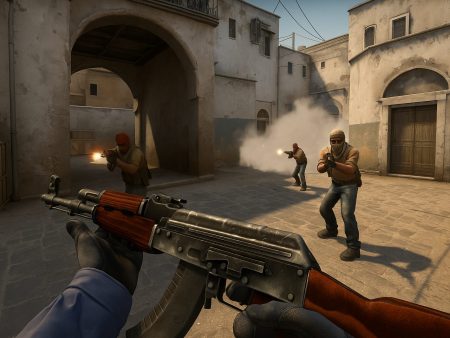
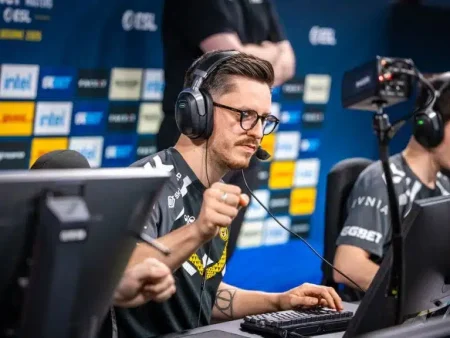
Master CS2 communication with this ultimate guide. Learn how to make effective callouts, coordinate with your team, avoid common mistakes, and elevate your gameplay with pro-level communication techniques.

Communication in Counter-Strike 2 (CS2) isn’t just a helpful bonus—it’s the lifeblood of a team’s success. Whether you’re pushing a bombsite or defending from a clutch, your ability to share information with your teammates can be the deciding factor between victory and defeat. Unlike games that lean more on individual heroics, CS2 is a tactical, team-based FPS where information is everything. A simple call like “2 B short, bomb down” can reshape your team’s entire strategy mid-round.
Why is this so important? Because no matter how cracked your aim is, you can’t see the whole map. Your teammates become your extra set of eyes. Good communication lets your team act like a single unit. It keeps everyone in the loop, prevents confusion, and creates opportunities for smart plays. A smoke here, a flash there—executed perfectly because the call was made at the right time.
Without clear and timely calls, even a team of skilled individuals can fall apart. So, if you’re serious about improving in CS2, mastering communication is a must—not just a bonus.
How This Guide Will Help You
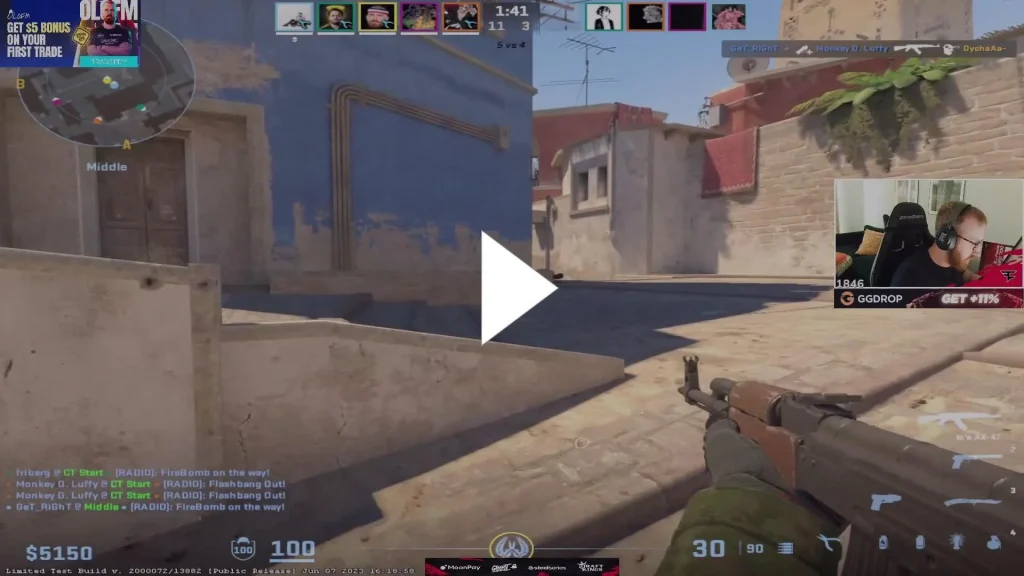
This guide is built to take you from being a silent player (or worse, an overtalker) to a confident and efficient communicator. You’ll learn not just what to say, but how and when to say it. Whether you’re new to CS2 or looking to sharpen your game as an experienced player, we’ll cover all the essentials—from the lingo pros use to tactical comms strategies, from gear optimization to team-building habits.
By the end of this guide, you’ll know how to:
- Make precise, useful callouts
- Keep your comms clear under pressure
- Work better with both randoms and friends
- Avoid common mistakes that clutter team chat
- Build stronger synergy with your team
Ready to level up your comms? Let’s get into it.
Understanding the Basics of In-Game Communication
What Are Calls in CS2?
In CS2, a “call” is any piece of verbal information you give your team that can help them make better decisions. It could be as simple as “enemy mid,” or as specific as “AWP holding angle on catwalk.” Calls aren’t just about enemy locations—they can cover everything from utility usage, rotation decisions, player health, to bomb status.
There are typically two types of calls:
- Reactive calls – These happen in the moment. For example, “3 pushing A long!” as you spot them.
- Strategic calls – These help organize team movement. For example, “Let’s fake B and rotate to A.”
Why are these important? Because time is everything in CS2. A call that comes a second too late could mean a teammate walks into a stack or fails to stop a bomb plant. Calls bridge the gap between individual actions and coordinated team plays.
A good rule of thumb: if it helps your team make better decisions or avoid danger, it’s worth calling.
The Role of a Shotcaller vs. Team Communication
In structured CS2 teams (and even in casual ranked matches), there’s often one player designated as the shotcaller or in-game leader (IGL). This person makes the big-picture decisions: when to rush, when to rotate, when to save. But this doesn’t mean they’re the only one talking. Far from it.
Everyone on the team contributes to communication:
- Entry fraggers call what they see as they push into sites.
- Support players call their utility usage.
- Lurkers provide info on enemy flanks or rotates.
- AWPers may call out angles they’re holding or enemies peeking.
The IGL filters this information and uses it to make decisions. So even if you’re not calling strats, your role is still critical. A quiet team is a dead team. But here’s the balance—everyone should talk, but nobody should spam. More on that soon.
Essential CS2 Callouts Every Player Must Know

Popular Maps and Key Callout Locations
You can’t communicate effectively if you don’t know the map vocabulary. CS2 maps have specific locations with commonly accepted names—these are called “callouts.” Learning these is like learning a second language, but once you’ve got it, everything becomes easier.
Here are some common callouts for popular maps:
Mirage:
- A Site, B Site, Mid
- Palace, Ramp, Tetris
- Catwalk, Window, Connector, Jungle, Market
Dust2:
- Long, Short (Cat), Mid
- B Doors, Tunnels, Car
- A Ramp, Goose, Elevator, CT Spawn
Inferno:
- Banana, B Site, Coffins
- A Site, Pit, Graveyard
- Mid, Arch, Library, Boiler
You don’t need to memorize every corner, but the more familiar you are, the better. Spend time walking around in offline mode or watching pro matches to pick up terms naturally.
Using Map Knowledge to Enhance Your Calls
It’s not enough to just say “They’re at B.” That’s vague. Are they pushing? Holding an angle? Lurking? You want to provide actionable, specific information.
Instead of “B,” say:
- “Two entering B site through tunnels, bomb spotted”
- “One lurking outside B tunnels with a deagle”
- “One car, one site—AWP holding window”
Your team can then decide:
- Should they rotate?
- Should they play for retake?
- Can they stack another site?
Precise map-based calls cut the guesswork and make team play faster and smarter. Your comms should paint a mental picture for your teammates.
How to Make Effective Calls in CS2
Be Clear and Concise
Let’s face it—nobody likes the guy who rambles in comms. Long-winded explanations cost time and can confuse teammates. Effective calls should be short, clear, and packed with useful info.
Here’s the difference:
Bad call:
“Uhh I think maybe there’s one guy mid… or top mid… I’m not sure, he could be going cat or lower, I don’t know.”
Good call:
“One mid, going cat, with AK.”
Stick to the point. Use specific words:
- Number of enemies: “Three long”
- Direction: “Rotating from T spawn”
- Status: “Low HP,” “bomb down”
- Weapons: “AWP mid,” “eco pistols B”
Clear and concise comms save lives—literally.
Advanced Communication Techniques
Reading the Enemy and Informing Your Team
One of the most powerful forms of communication in CS2 isn’t just calling what you see, but what you anticipate. As you gain experience, you start recognizing patterns—enemy team habits, economy reads, rotate timings—and communicating these insights can give your team a major strategic edge.
Let’s say it’s round 5 and the opposing team has lost three rounds in a row. You might call out, “Likely eco this round—watch for pistol rush.” That one line prompts your teammates to play more defensively, maybe hold closer angles or use a molotov to delay a push. It’s about proactivity, not reactivity.
This also includes reporting habits like, “They always double-nade top mid,” or “Their AWPer holds B site from car every round.” These kinds of heads-up calls let your team prepare counterplays. When everyone’s thinking ahead, your opponents feel like they’re being outplayed before they even make a move.
The more often you share predictive insights based on patterns, the more your teammates trust your reads—and the more dangerous your team becomes.
Coordinating Pushes and Rotations
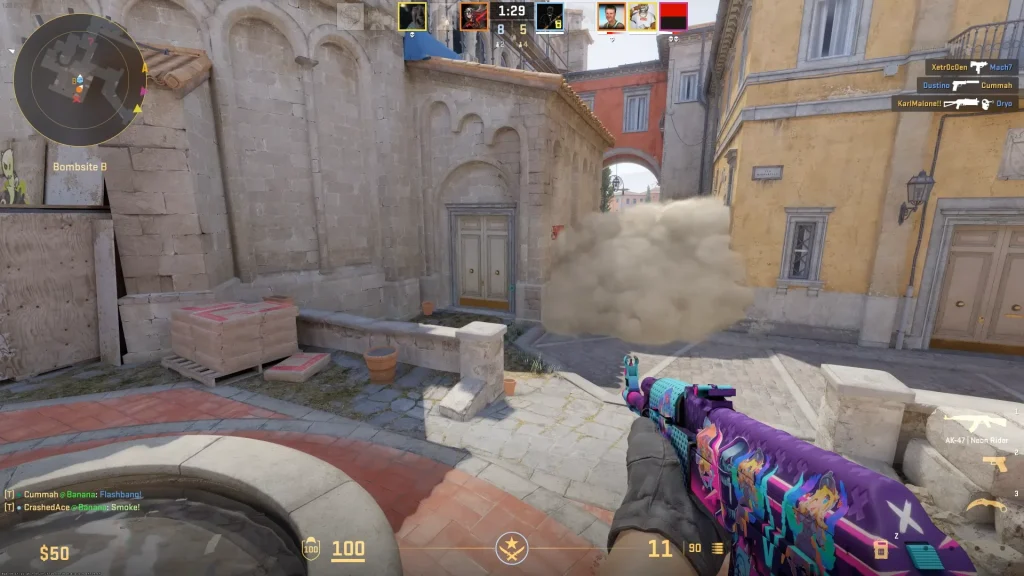
Communication isn’t just for defense—it’s the foundation of aggressive team strategies, too. Say your team wants to execute a B split. You’ll need several calls happening in quick succession:
- “Smokes out mid”
- “Flashing over B”
- “Push in 3…2…1—go!”
Timing is everything. Poorly coordinated pushes lead to teammates going in one by one and getting picked off. Effective comms ensure everyone’s on the same page. Rotations are similar: a player anchoring A hears footsteps and calls, “3 A ramp, rotate now!” The rest of the team knows to shift immediately and hold proper positions.
If you die early, your role isn’t over. Become the team’s temporary eyes and ears. Watch minimap movements and call rotations like, “Two rotating CT,” or “One flanking long.” Just because you’re out doesn’t mean you stop talking—your intel can still win rounds.
Calling for Utility (Flashes, Smokes, Molotovs)
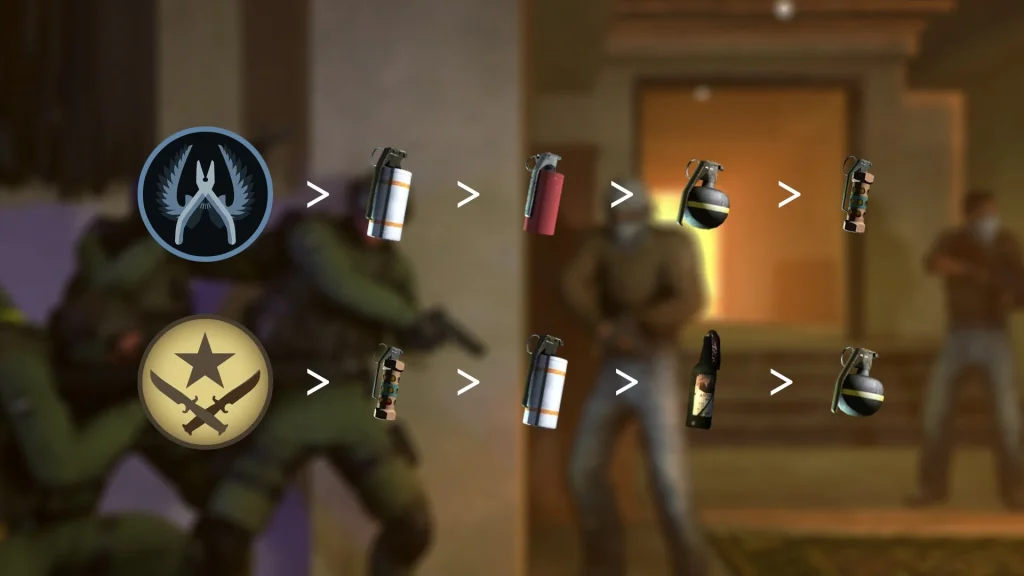
This is one of the most underused forms of communication in lower-tier play, but it’s vital. Don’t just throw utility—call it.
Here’s how it usually goes wrong:
- Player A throws a smoke.
- Player B throws a flash… right into Player A’s face.
- Player C peeks with no support because he thought a molotov was coming.
Coordination prevents that chaos. Use quick phrases like:
- “Smoking CT in 3”
- “Flash over now!”
- “Hold—mollying site box”
It becomes even more important during executes. Calling utility not only prevents overlap but lets your teammates capitalize on its effects. For example, if you molotov a common spot like Sandbags on Inferno Banana, call it: “Mollying Sandbags—watch for jump peek!” It signals teammates to watch for repositioning or flushed-out enemies.
Great teams sound like orchestras during executes. Everyone’s utility has a purpose, and every call syncs to create an unstoppable rhythm. That level of coordination starts with solid comms.
Tools and Equipment That Improve In-Game Communication
Best Headsets and Microphones
Good gear doesn’t make you a better communicator overnight, but poor gear can absolutely break your comms. If your mic crackles, cuts out, or picks up background noise, your calls might confuse teammates more than they help.
Investing in a solid headset and mic combo ensures your voice is heard clearly and instantly. Here are some go-to features to look for:
- Noise cancellation: So ambient sounds don’t interfere.
- Directional audio support: For better in-game awareness.
- Comfort for long sessions: You don’t want to rip off your headset mid-match.
Some solid choices popular among CS2 players include the HyperX Cloud II, SteelSeries Arctis Nova Pro, and Audio-Technica ATH-G1 for high-end options. For mics, standalone options like the Blue Yeti or Elgato Wave:3 deliver excellent voice clarity.
You don’t need studio-quality gear, but if your teammates constantly say “what?” after every call, it’s time for an upgrade.
Optimizing Your Audio Settings for Clarity

Your setup doesn’t end with hardware—your in-game and system audio settings are just as important. If the game drowns out voice chat, your calls might go unnoticed. Here’s how to optimize:
- Adjust CS2 in-game voice volume: Set
voice_scaleto a balanced level, usually between0.4to0.7, depending on preference. - Enable voice receive filters: In Steam settings, you can clean up audio inputs so only necessary frequencies are transmitted.
- Set push-to-talk: Always better than open mic—it prevents unnecessary noise.
- Use software enhancements: Apps like NVIDIA Broadcast can cancel background noise for cleaner comms.
If your team can’t clearly hear you mid-gunfight, you’re not really communicating—you’re just adding to the chaos. Clean, crisp audio makes a massive difference, especially in clutch moments.
The Psychology of Communication in CS2
Staying Calm Under Pressure
Ever noticed how some players go completely silent in 1v3 clutch situations? Or worse, they start panicking and yelling? Emotional reactions are natural, especially in high-stakes rounds, but learning to stay calm is key to effective communication.
Let’s paint a picture. You’re in a 1v2 post-plant situation. One teammate is watching your screen. He starts yelling, “He’s right! No, left! He’s coming—watch behind!” Suddenly, you’re overwhelmed with noise and second-guessing every move.
Now contrast that with a calm teammate who says, “Last seen Banana. Other one was library 10 seconds ago.” That information gives you confidence to make a smart decision instead of reacting in panic.
Calm communication under pressure:
- Keeps your focus sharp
- Prevents mental overload
- Encourages better decision-making
It takes practice. One helpful habit is to mentally note what’s essential before speaking. If it’s not helping your teammate make a better play, maybe it’s best left unsaid.
Handling Toxic Teammates and Keeping Morale High
Toxicity is one of CS2’s age-old problems. You’ll inevitably run into teammates who tilt, flame, or refuse to communicate. The worst thing you can do is match their energy.
Instead, be the person who resets the vibe:
- Stay positive: A simple “good try” or “we got next round” can go a long way.
- Redirect energy: “Let’s focus—we win this with a full buy.”
- Mute if needed: Sometimes, peace is better than proving a point.
Also, remember—communication is as much about tone as content. Barking orders like “Go A! Rotate now!” might be correct, but it can sound aggressive. A more team-friendly version? “Let’s hit A—B’s stacked.”
Keeping morale high isn’t just about avoiding fights. It’s about creating a space where players want to communicate. When everyone feels heard and respected, comms naturally flow better.
The Do’s and Don’ts of CS2 Communication
Common Communication Mistakes
Even well-meaning players make communication blunders. Here are some pitfalls to avoid:
- Overcalling: Flooding voice chat with every detail. Stick to relevant info only.
- Talking over others: Especially during mid-fight calls. It causes confusion and missed info.
- Backseat calling while dead: Your job is support, not command. Don’t hijack the round.
- Misusing callouts: Calling “window” when the enemy’s actually in “ladder” throws off your team.
- Being vague: “They’re over there” means nothing. Be precise—“Two pushing short A.”
Most of these can be solved by following one simple rule: Communicate the right info at the right time in the right tone.
How to Avoid Overcalling
Overcalling is when a player dumps a flood of information in one breath—most of which is unnecessary. Not only does it overwhelm teammates, it can hide the important details. For example:
Overcall: “Okay I saw one go mid and then one guy peeked from short I think and I heard someone drop so maybe they’re pushing A but could also be a fake so let’s rotate but I’m not sure—”
Better: “Two mid, one short. Could be A split.”
Here’s how to keep it tight:
- Prioritize. Call what matters now.
- Pause. Let teammates respond before adding more.
- Be confident. “I think” and “maybe” clutter your message.
When in doubt, remember this: You’re giving your team a tool, not a monologue. Deliver your info and get out of the way.
Team Roles and How They Affect Communication
Entry Fraggers, Supports, IGLs, and Their Responsibilities
In CS2, each player usually fills a specific role within the team structure. These roles don’t just define what guns or spots they play—they also dictate how and what they should communicate. Understanding your role is key to knowing when to speak up and what your team needs to hear from you.
Entry Fragger
The tip of the spear. The entry is responsible for getting the first kill or gathering early info when taking a site. Because this player often dies first, their callouts need to be rapid, loud, and incredibly specific.
Typical calls might include:
- “One site default box”
- “AWPer triple—don’t peek”
- “Tagged site—go trade!”
Their job is to give the team instant feedback during executes. They don’t have time for full sentences; their calls are usually the raw intel the rest of the team uses to follow up or rotate.
Support Player
Supports use their utility to set up the entry fraggers and control space. Their comms usually involve utility coordination:
- “Flashing over—peek now”
- “Smoking stairs—wait 2 seconds”
- “Molly firebox ready”
Supports are often the glue of the strat. Their calls ensure the team pushes together, with the right nades and spacing.
In-Game Leader (IGL)
The IGL is the brain. This role calls strats, sets tempo, and reacts to information gathered by others. Their comms are often full-round perspectives:
- “Let’s default—feel out their setup”
- “If they smoke B, fake A and split mid”
- “Hold for pushes—don’t force peeks”
A good IGL also knows when not to talk—giving room for important micro-calls during clutch situations.
Lurker
The lurker operates alone, often on the opposite side of the map. Their comms are all about timing and rotations:
- “One pushing T ramp—bomb’s safe”
- “Mid is clear, I can backstab B”
- “Wait—rotating now, I have info”
A lurker should avoid overtalking. Their calls come in bursts but can shift the round if timed right.
Role-Based Call Examples
Let’s break down a full-site execute from each player’s communication standpoint. Imagine your team is executing a B site take on Mirage.
- IGL: “We’re doing the B split. Smokes mid and B short, then hit.”
- Support: “Throwing short smoke now. Flashing over apps in 3, 2, 1… go!”
- Entry Fragger: “Van! One site, tagged—dead. One bench!”
- Lurker: “Connector’s pushing A—I’ll catch him if he rotates.”
- IGL (mid-round): “Plant default, then play post. Hold for CT push.”
In just 15 seconds, you get a whole symphony of roles working together—each player giving input from their unique angle. When every role communicates properly, the team becomes a well-oiled machine.
Practicing and Improving Your Communication Skills
Drills and Exercises for Better Communication
Want to become the kind of player teammates want to queue with? Then communication practice is just as important as aim training. You can actually develop your comms the same way you develop muscle memory—through repetition and conscious feedback.
Here are some drills to sharpen your in-game speech:
- 30-Second Rundowns:
Load into a map solo and spend 30 seconds calling everything you see aloud as if you’re live in a match. Focus on accuracy, speed, and clarity.
Example: “Crossing A ramp, molly stairs… peeking palace, no contact… clearing jungle.” - Callout Quizzes:
Use community-made maps or flashcards to test your knowledge of callouts. The faster you can name a location, the faster you can react during a real match. - VOD Reviews with Comms On:
Record your gameplay with voice included. Watch it back later and ask yourself:- Was that call necessary?
- Was I too vague or too late?
- Did I talk over a teammate?
This kind of feedback loop accelerates growth fast.
- Play with a Mic-Only Team:
Join scrims or pugs that require voice chat. Playing in environments where comms are mandatory forces you out of silence and into leadership, even if you’re not the IGL.
Reviewing Demos to Learn From Mistakes
Demos are an underrated goldmine. Watching your matches with a focus on communication reveals patterns you’d never catch live. Pay close attention to:
- Calls you didn’t make but should have
- Conflicting comms that led to confusion
- Missed timings due to lack of coordination
Even reviewing pro demos with an ear for comms can help. Listen to how players like gla1ve, nitr0, or jame communicate under pressure. Pros don’t just shoot better—they talk better.
Over time, your awareness sharpens. You become more deliberate, your words carry more weight, and your teammates play better just by listening to you.
Communication in Solo Queue vs. Team Play
Adapting Your Calls Based on Team Dynamics
Solo queue and structured team play are completely different beasts. In team play, you often know your players’ habits, strengths, and preferences. But in solo queue? You’re working with strangers, and half of them might not even have a mic.
Here’s how you adapt:
- Solo Queue: Keep calls basic and neutral. Avoid assuming shared strategies.
Say: “One site, I’m flashing—peek?”
Don’t say: “Do that strat we practiced with double smokes mid.” - Team Play: You can afford deeper layers of comms, like double fakes or eco reads, because there’s trust and repetition built in.
In solo queue, your job is often to set the tone. If you’re calm, helpful, and clear, others will usually follow suit. Toxicity spreads fast—but so does teamwork when someone steps up with good comms.
Encouraging Communication in PUGs and Matchmaking
One of the biggest challenges in solo games is dead comms. But that doesn’t mean you give up. You can encourage teammates with:
- Short, clear calls: “2 A, rotate now”
- Positive feedback: “Nice hold bro,” or “Good info”
- Questions: “Want to push mid next round?”
Even if only two or three people on your team talk, you can build a “mini-core” of communication that boosts your round wins.
And remember—when someone does give good comms, respond. That creates a feedback loop where more players feel confident to speak up. In a way, comms in solo queue are like planting seeds. Water them with clarity, and you’ll grow stronger team plays.
Real-World Examples of Great CS2 Communication
Pro Players Known for Their Communication
Watching professional players is one of the best ways to learn what elite-level communication sounds like. Here are a few names known for their exceptional in-game chatter:
- gla1ve (Astralis): Legendary IGL known for calm, strategic comms and mid-round adaptations.
- nitr0 (ex-Liquid): Master at coordinating executes and rotations under pressure.
- Boombl4 (ex-NaVi): Known for high-energy calling and hype-building for teammates.
- Jame (Virtus.pro): A unique style of slow-paced calling paired with economic awareness.
These players don’t just give info—they lead. Their communication styles vary, but what they share is clarity, purpose, and rhythm. You can learn a lot just by listening during player POVs or team comms releases.
Analysis of Iconic Rounds and Their Callouts
Take, for instance, the legendary Astralis B-site retake on Inferno against Team Liquid. Everyone remembers the triple grenade kill—but what stood out was the call:
- “They’re planting default—molly second oranges, nade stack now!”
It took less than three seconds, and three players executed the perfect utility combo. Without that call, it’s just another post-plant situation. With it? It’s a highlight reel and round win.
Another great example: Stewie2K’s iconic Overpass play where he pushed through smoke at B. His call? “I’m pushing smoke—flash for me.” Boom. Instant info, instant support, round changer.
The takeaway? The best plays often come from the best calls.
How to Build a Communication-Oriented Team Culture
Setting Standards and Expectations
Whether you’re running a casual five-stack or building a semi-pro team, team culture starts with communication. If you want players to consistently speak up, stay positive, and coordinate plays, you need to establish those expectations early and often.
Start by talking as a group about communication goals:
- What kind of calls do we want in clutches?
- Who’s allowed to talk when dead?
- How should we handle tilted teammates?
These questions aren’t just philosophical—they shape your entire playstyle. When everyone agrees to call rotations, share utility plans, and keep the mic clear during fights, the difference in performance is massive.
It’s also about consistency. Don’t just hold your squad accountable when someone is flaming—encourage good behavior, too. Celebrate well-timed flashes or strong mid-round calls. Make it part of the team’s identity.
Tools like scrim reviews, Discord voice logs, and post-match debriefs can help you analyze communication. Ask after each game: “Was our comms clean?” If not, what can be improved?
The best CS2 teams aren’t just filled with fraggers—they’re filled with communicators who trust and understand each other.
Conducting Regular Communication Reviews
Just like you review demos for aim and positioning, you should also review your comms. Here’s a simple format you can follow every week:
- Pick 1-2 recent matches or scrims.
- Listen back to key rounds, especially executes and clutches.
- Take notes: Was there overlap? Silence? Confusion?
- Ask the team: What worked? What didn’t?
- Set a focus goal for the next match, like “clear post-plant comms” or “no overtalking in 2vX.”
This kind of structured reflection helps comms evolve. Players stop speaking just to speak—and start speaking with purpose.
Conclusion
Effective communication is the secret weapon of every great CS2 player. It’s not about yelling or mic-spamming—it’s about clarity, timing, and trust. From learning callouts and gear optimization to mastering role-specific comms and reading the enemy, solid communication transforms individuals into a team.
Whether you’re a clutch master, support king, or shot-calling IGL, your voice is your strongest tool. Use it wisely, use it often, and you’ll see your impact skyrocket—not just in scoreboard stats, but in how your team performs round after round.
And here’s the best part: communication is a learnable skill. You can train it, refine it, and perfect it. Every round you play is a chance to lead better, support faster, and win smarter—just by saying the right thing at the right time.
So next time you load into a match, don’t just warm up your aim—warm up your mic. Let’s make every call count.
FAQs
What makes a good CS2 shotcaller?
A great shotcaller isn’t just someone who knows strats—they’re someone who knows when to call them, how to adapt mid-round, and how to keep team comms focused. Timing, confidence, and clarity are key.
How can I improve my callout vocabulary?
Start by studying map layouts and popular callouts through community maps or pro matches. Practice walking through maps in offline mode while saying callouts aloud. Watch pro POVs and mimic their terms.
Should I call everything I see?
No. Prioritize information that affects your team immediately—enemy positions, bomb status, or utility usage. Avoid cluttering comms with unnecessary details like footsteps far from action.
How do I deal with teammates who don’t communicate?
Stay positive and lead by example. Keep your comms clear and respectful—often, quieter players will join in when they feel the environment is cooperative. If not, use the radar and voice your own plans clearly.
Is communication more important than aim?
At the highest levels of play, communication amplifies your aim. Good comms can prevent bad fights, win post-plants, and create openings that raw aim alone can’t. Ideally, you want both—but comms give your team consistency.